You’ve likely noticed how certain spaces feel expansive while others seem confined, even when they share identical dimensions. The difference often lies in your wall lighting strategy. When you understand how light interacts with vertical surfaces—through techniques like grazing, washing, or uplighting—you gain the ability to reshape proportions, enhance textures, and establish mood. These fifteen approaches reveal precisely how strategic illumination converts ordinary walls into design elements that fundamentally alter spatial perception.
Uplighting Creates Dramatic Ambiance
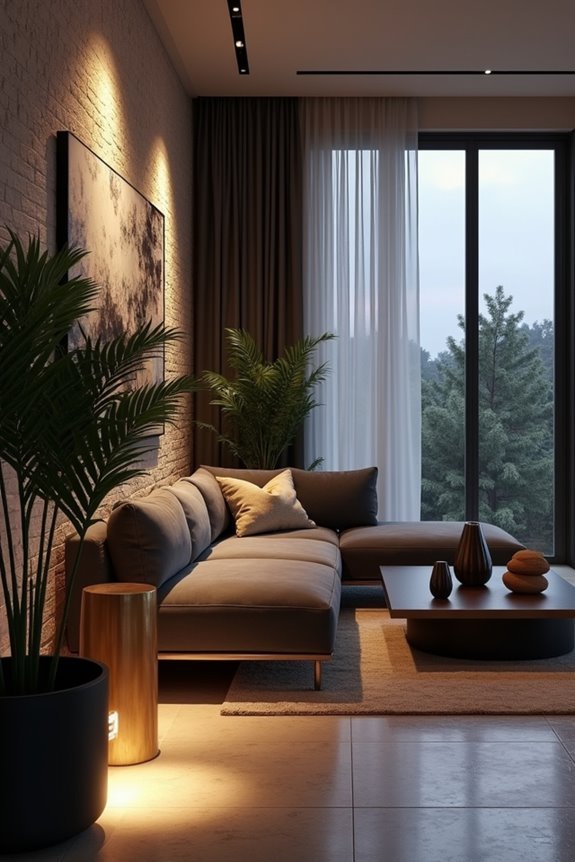
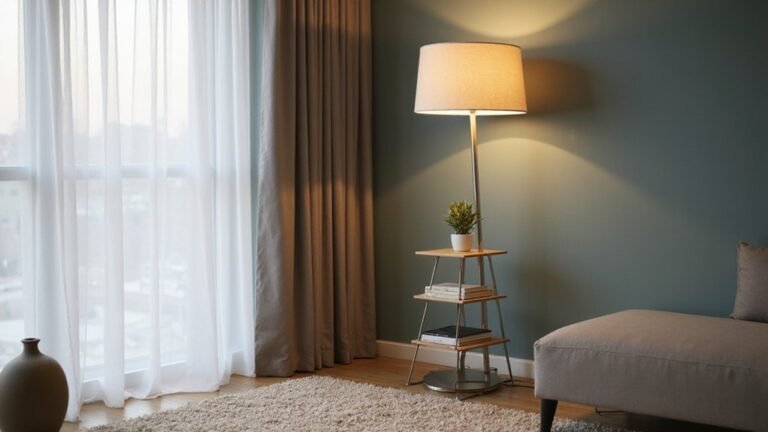
When light travels upward along a wall, it transforms ordinary vertical surfaces into architectural features that command attention. You’ll notice how uplighting techniques create visual height, making rooms feel more spacious and sophisticated. Position fixtures at floor level or mount them low on walls to cast light upward, emphasizing texture and dimension. Similar to motion-sensor lights on staircases, uplighting provides both functional illumination and aesthetic appeal.
This approach excels at mood enhancement, particularly in living rooms and bedrooms where you’re seeking intimate atmospheres. You’ll achieve ideal results by directing light toward smooth walls for clean washes or textured surfaces for dramatic shadow play. Consider installing dimmable uplights to adjust intensity based on time of day and activity. The technique works exceptionally well when you’re highlighting architectural details like crown molding or exposed beams.
Sconces Frame Architectural Features
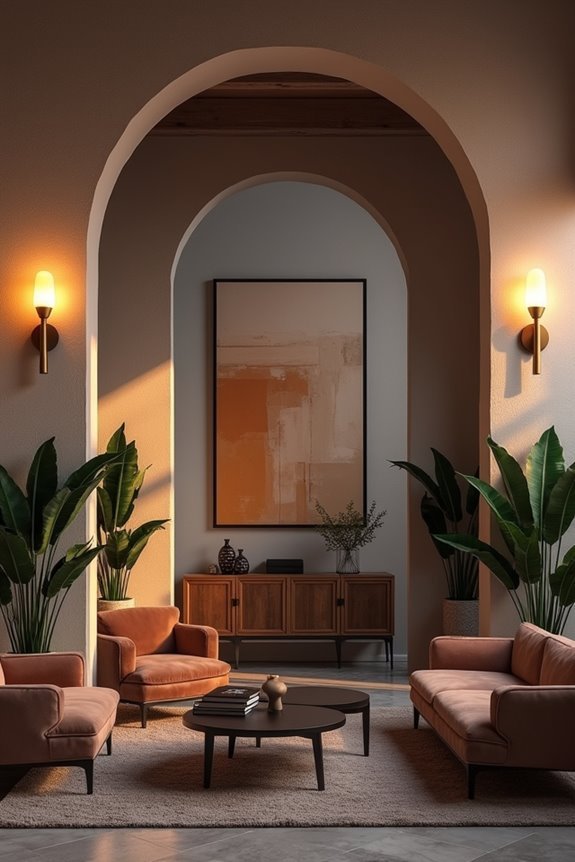
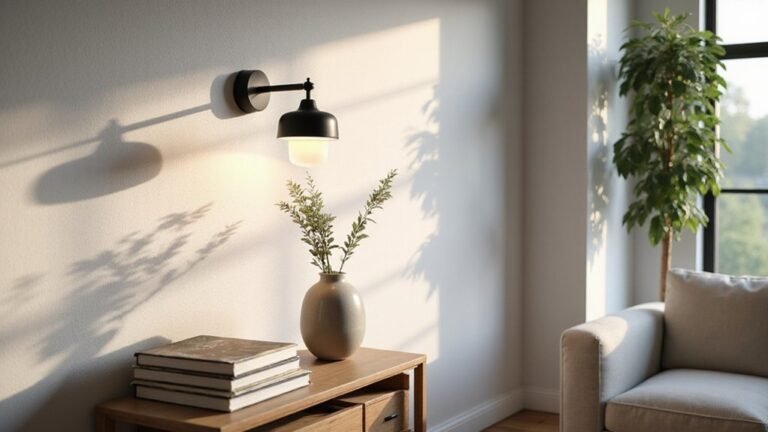
Strategic sconce placement transforms doorways, windows, and alcoves into deliberate focal points that define your room’s visual hierarchy. You’ll achieve architectural integration by positioning fixtures where vertical and horizontal planes intersect—these changeover zones naturally draw the eye and benefit from enhanced illumination.
Select sconce styles that complement your existing millwork rather than compete with it. Modern linear designs emphasize clean doorframes, while traditional arm sconces enhance period moldings. Mount fixtures at consistent heights to create visual rhythm across multiple openings. Using layered lighting combinations can help create depth and dimension throughout connected spaces.
Consider the interplay between light direction and surface texture. Upward-casting sconces accentuate crown molding depth, while downward illumination highlights baseboards and flooring changeovers. You’re fundamentally using light as an architectural tool that reveals spatial boundaries and celebrates structural elements.
Picture Lights Highlight Artwork
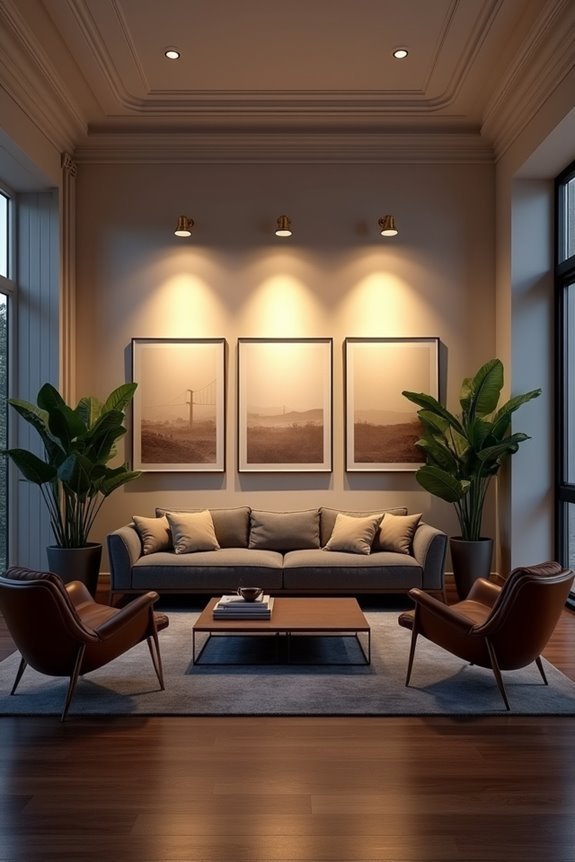
Dedicated picture lights create museum-quality illumination that preserves color accuracy while preventing the glare and heat damage associated with ambient lighting solutions. You’ll need to position fixtures 6-12 inches from the wall, angling them at 30 degrees to minimize reflections on glazed surfaces. LED picture lights offer adjustable light intensity, letting you customize brightness based on your artwork’s size and medium. Consider your art placement when selecting fixture lengths—the light bar should span two-thirds of the frame’s width for balanced coverage. Similar to strategic garden lighting, proper positioning creates depth and visual drama that enhances your artwork’s impact after dark. Adjustable fixtures prove invaluable when you rotate pieces seasonally. Brass, bronze, and matte black finishes integrate seamlessly with frame styles while maintaining focus on the artwork itself rather than the lighting mechanism.
Recessed Strips Define Wall Panels
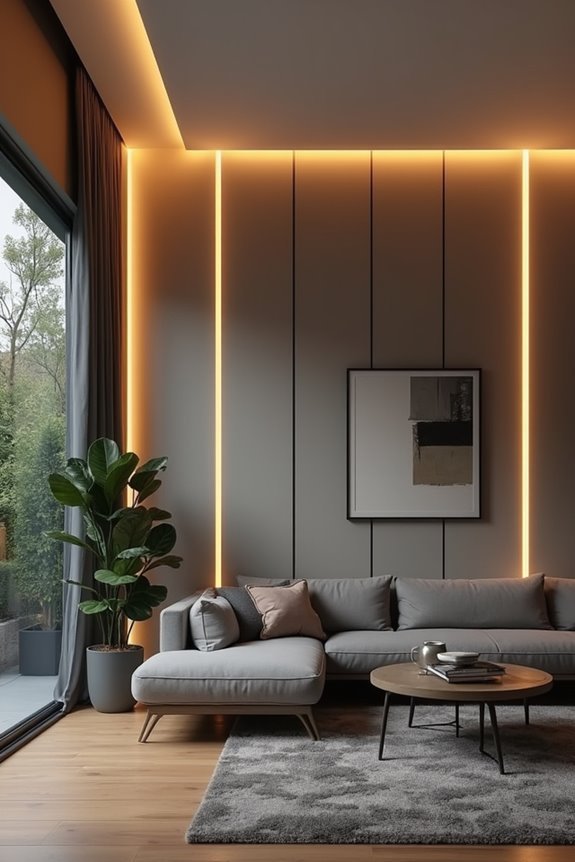
Recessed strip lighting transforms flat walls into dimensional focal points by carving visual depth into architectural millwork and paneling systems. You’ll achieve dramatic shadow lines when you install LED strips within routed channels along panel edges or borders. This recessed lighting technique emphasizes the geometric patterns of raised panels, wainscoting, or board-and-batten applications.
Position your strips to graze the wall surface at precise angles, creating contrast between illuminated faces and shadowed recesses. You can highlight vertical divisions in contemporary paneling or accentuate traditional molding profiles. The key lies in proper placement—typically within quarter-inch channels that conceal the light source while directing output across adjacent surfaces. Color temperature options allow you to customize the mood from warm and inviting to cool and contemporary.
This approach works particularly well in dining rooms, hallways, and feature walls where wall paneling deserves emphasis without competing fixtures.
Cove Lighting Softens Ceilings
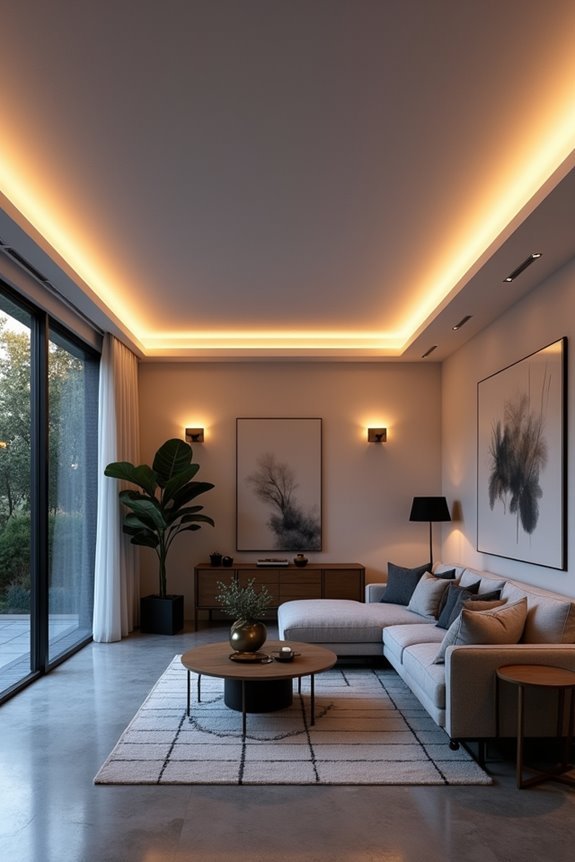
When you install lighting within horizontal recesses near the ceiling perimeter, you’ll create an ambient glow that eliminates harsh overhead glare while visually raising room height. This technique conceals LED strips behind ceiling trim, directing light upward to wash across the ceiling perimeter lighting. Floating ceiling panels create an additional layer of architectural drama while maintaining a clean, sophisticated look.
Wall Washers Create Even Glow
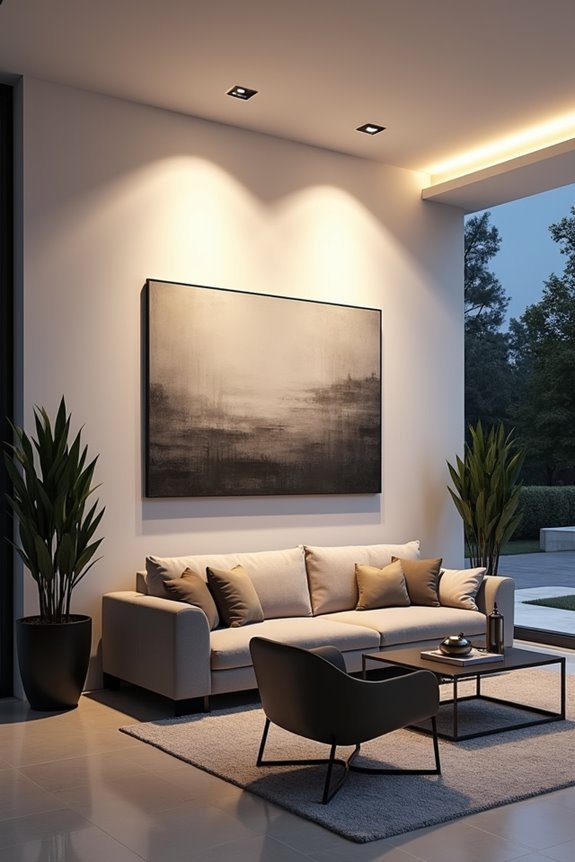
Wall Washers Create Even Glow
Positioned at strategic intervals along your walls, specialized fixtures beam light at precise angles to eliminate shadows and create uniform illumination across vertical surfaces. Wall washers excel at revealing texture and architectural details you’d otherwise miss in standard lighting conditions. Their wall integration requires mounting fixtures 24-36 inches from surfaces, allowing light to spread evenly downward. You’ll control glow intensity through dimmer switches, adjusting ambient brightness to match activities and moods throughout your day. Circular lighting designs can soften harsh geometric lines while maintaining modern aesthetics.
These fixtures work best on smooth or subtly textured walls where light can travel uninterrupted. You’ll find them particularly effective in galleries, hallways, and living spaces where consistent illumination matters. Install them on tracks or recessed housings for clean, unobtrusive ceiling lines.
Track Lighting Adds Flexibility
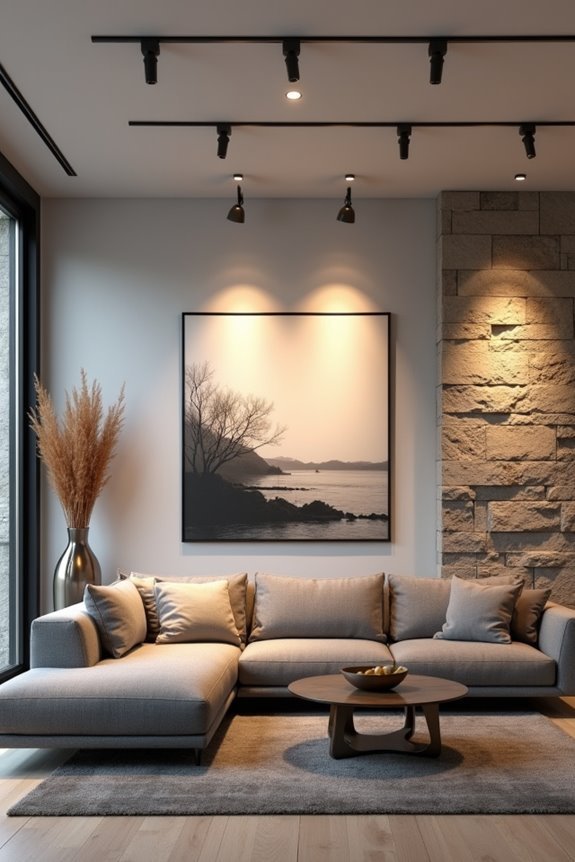
Adjustable fixtures mounted on linear rails give you unprecedented control over directional illumination, letting you redirect beams as your space evolves. Track versatility becomes particularly valuable in galleries, kitchens, and multipurpose rooms where focal points change regularly. You’ll appreciate how individual heads swivel and rotate independently, allowing you to highlight artwork, architectural features, or task areas without rewiring. Light temperature selection helps create the perfect ambiance for any room’s purpose.
Modern systems integrate ambient track options that combine focused spotlights with diffused lighting elements, creating layered illumination schemes. This dual functionality eliminates the need for multiple fixture types. You can specify track configurations in straight runs, L-shapes, or curved profiles to follow your ceiling architecture. Strategic placement along walls creates grazing effects that emphasize texture while maintaining adaptability for future room modifications.
Accent Walls With Color Washes
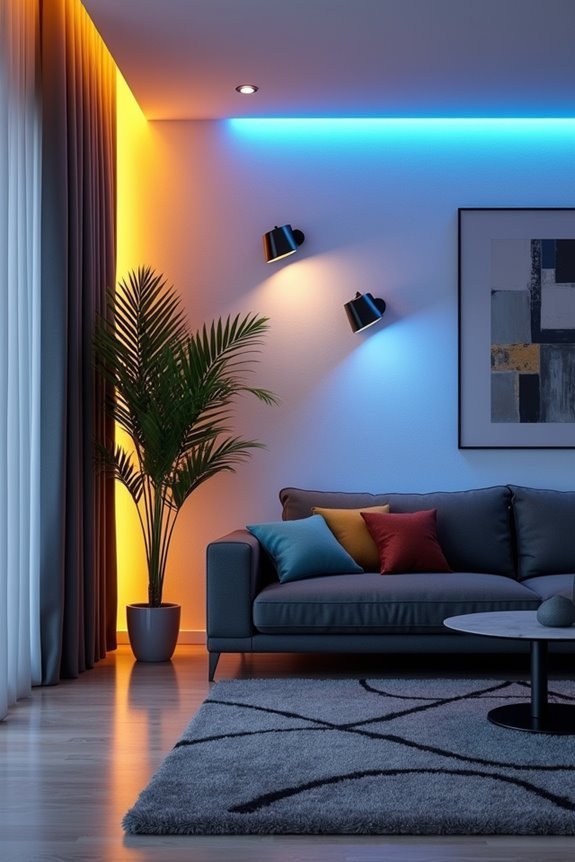
Colored light transforms ordinary walls into dynamic architectural canvases through deliberate wavelength selection and fixture positioning. You’ll achieve ideal results by mounting RGB or tunable fixtures at 45-degree angles, allowing beams to graze vertical surfaces and create dimensional depth. Strategic color blending between multiple sources produces gradient effects that shift throughout your space, while single-hue installations deliver bold, unified statements.
Master wash techniques by controlling beam spread and intensity. Wide-angle lenses distribute light evenly across expansive walls, whereas narrow beams emphasize specific architectural details. You can layer complementary colors to generate sophisticated chromatic shifts, or deploy contrasting hues for dramatic visual separation. Position fixtures 18-24 inches from wall surfaces to minimize hotspots and guarantee uniform coverage that enhances texture without creating harsh shadows. Layered lighting techniques combine wall washes with other light sources to create depth and visual interest in any room.
Backlit Mirrors Add Depth
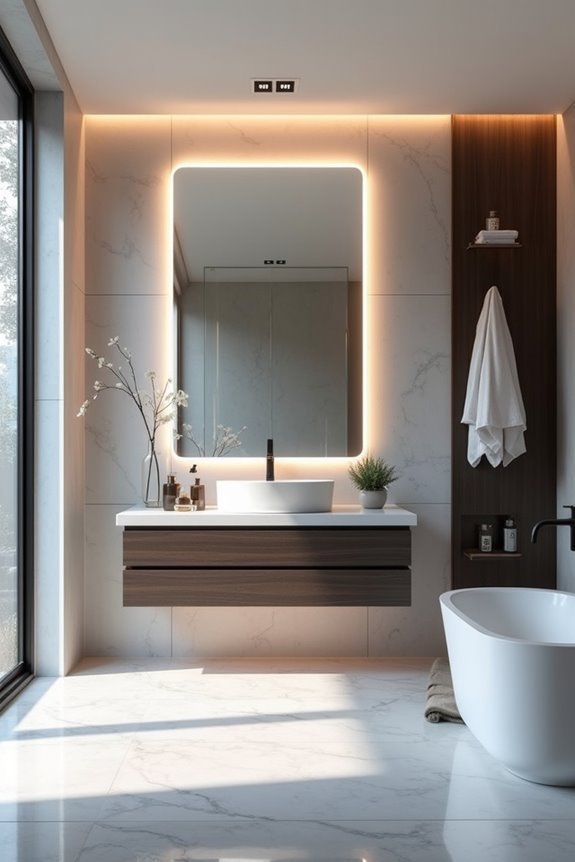
When integrated behind reflective surfaces, LED strips create illusion of expanded space by generating luminous halos that dissolve visual boundaries. You’ll transform compact bathrooms and narrow hallways into seemingly larger environments through this strategic placement. The backlit perimeter produces optical illusions that push perceived walls outward while adding architectural sophistication.
Install LED tape around mirror edges, ensuring even light distribution across all sides. You can choose color temperatures between 3000K-4000K for flattering illumination that enhances grooming tasks without distortion. Sconce lighting fixtures provide additional task lighting that complements backlit mirrors perfectly. Dimmer controls let you adjust intensity based on time of day or mood requirements.
This technique works particularly well above vanities, in entryways, and behind full-length dressing mirrors. The reflected light amplifies ambient brightness throughout the room while reducing reliance on overhead fixtures, creating layered lighting schemes that feel professionally designed.
Shadow Play With Projection
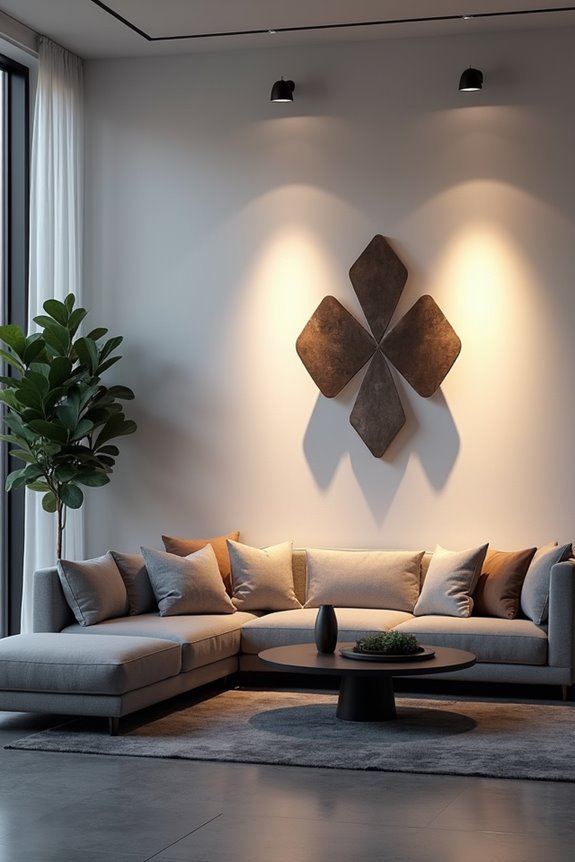
Strategic placement of directional fixtures transforms ordinary walls into dynamic canvases where light and shadow become deliberate design elements. You’ll realize that uplighting sculptural objects or architectural features creates dramatic shadow patterns that shift throughout the day as natural light changes. Position adjustable spotlights at varying angles to control light dynamics and emphasize texture on textured surfaces like brick, stone, or wood paneling.
Consider installing wall-mounted fixtures with focused beams to cast intentional shadows from plants, decorative screens, or geometric sculptures. You can layer multiple light sources at different intensities to build depth and visual complexity. This technique works particularly well in minimalist spaces where shadow patterns add interest without cluttering surfaces. The interplay between illuminated and darkened areas establishes rhythm and movement across your walls. clean geometric lines form the foundation of modern minimalist lighting design that enhances spatial awareness while maintaining visual simplicity.
Floating Shelves With LED
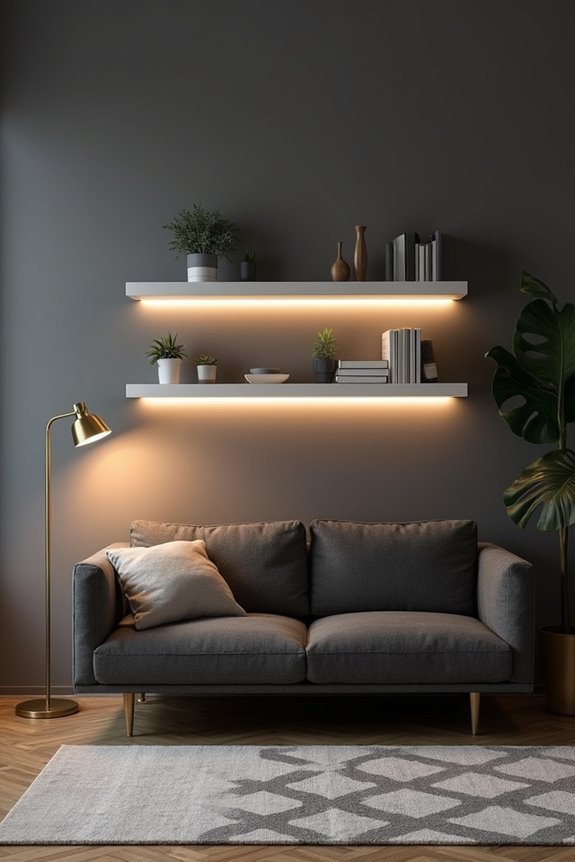
LED-integrated floating shelves combine functional storage with ambient illumination, creating layers of light that enhance both displayed objects and surrounding wall surfaces. You’ll find that strip lighting installed beneath or behind shelves casts a subtle glow that defines wall depth while highlighting your curated displays.
When selecting floating shelf styles, consider minimalist designs with recessed channels that conceal LED strips, maintaining clean lines throughout your space. Thicker profiles accommodate wider strips for increased brightness, while slimmer options provide delicate accent lighting.
LED color options allow you to establish specific moods—warm whites create inviting atmospheres in living areas, while cool whites suit modern kitchens and home offices. Dimmable systems give you control over intensity, adapting illumination levels from dramatic evening ambiance to practical task lighting.
Textured Walls With Grazing Light
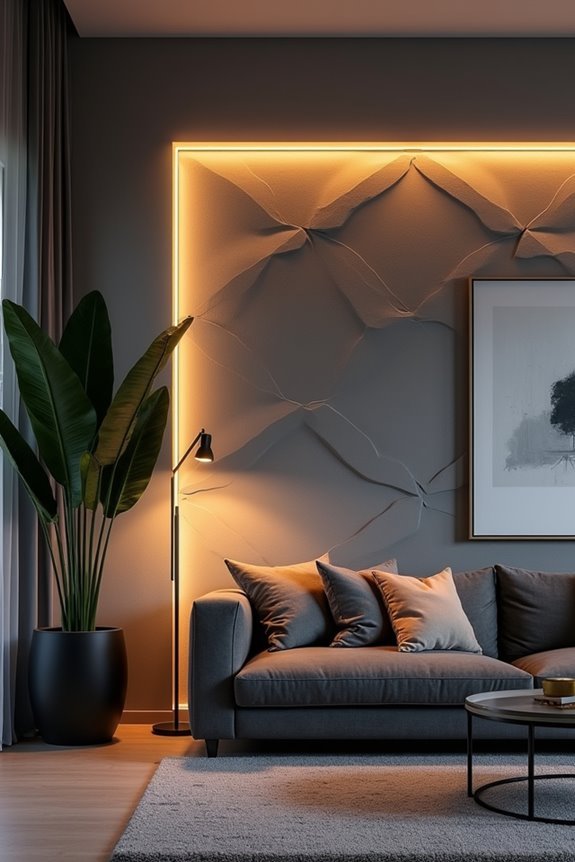
Grazing light transforms textured walls into dynamic focal points by positioning fixtures at acute angles that emphasize surface irregularities and dimensional patterns. You’ll achieve superior results by mounting linear fixtures or adjustable spotlights within 6-12 inches of your wall surface, allowing light to skim across textured finishes like stacked stone, venetian plaster, or three-dimensional tile.
The grazing techniques you select depend on your texture depth and desired drama. Shallow textures require closer fixture placement at sharper angles, while deeper relief patterns benefit from slightly increased distances. You’ll want to use narrow beam angles between 10-30 degrees to maximize shadow play and highlight architectural detail. Consider dimmable LED strips for continuous coverage or individual wall washers for targeted emphasis on specific textured sections.
Niche Lighting For Display Objects
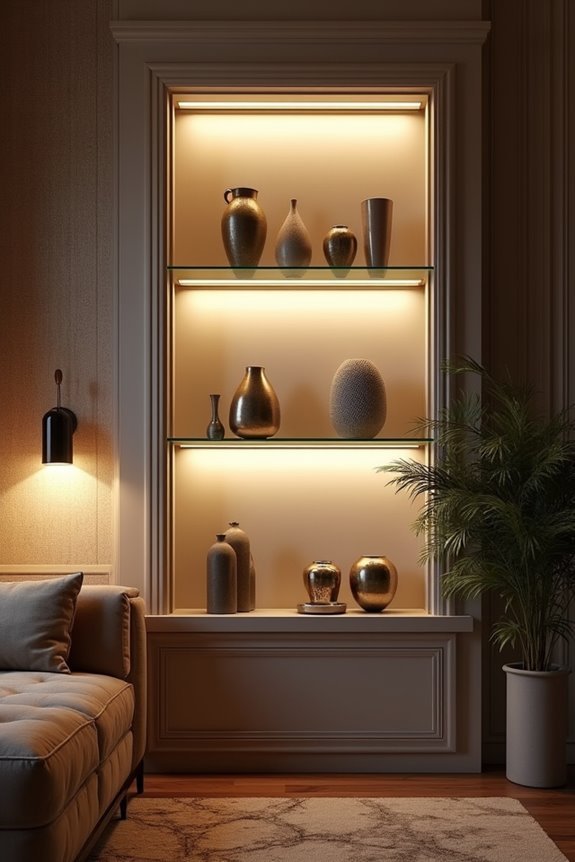
Recessed niche illumination requires precise fixture placement to eliminate shadows while accentuating the three-dimensional qualities of displayed objects. You’ll achieve ideal results by positioning LED strip lights at the niche’s upper perimeter, directing light downward at a 30-degree angle. This configuration creates even illumination across display shelves without hot spots.
For object spotlighting, install adjustable puck lights that allow you to modify beam angles as your collection changes. You’ll want fixtures with high color rendering index (CRI) ratings above 90 to accurately represent artwork and collectibles. Consider dimming capabilities to adjust intensity based on ambient light conditions.
Layer your lighting by combining overhead sources with backlighting behind translucent shelving. This technique adds depth and separates objects from the wall plane, creating visual interest through contrast and dimensionality.
Statement Walls With Uplighting
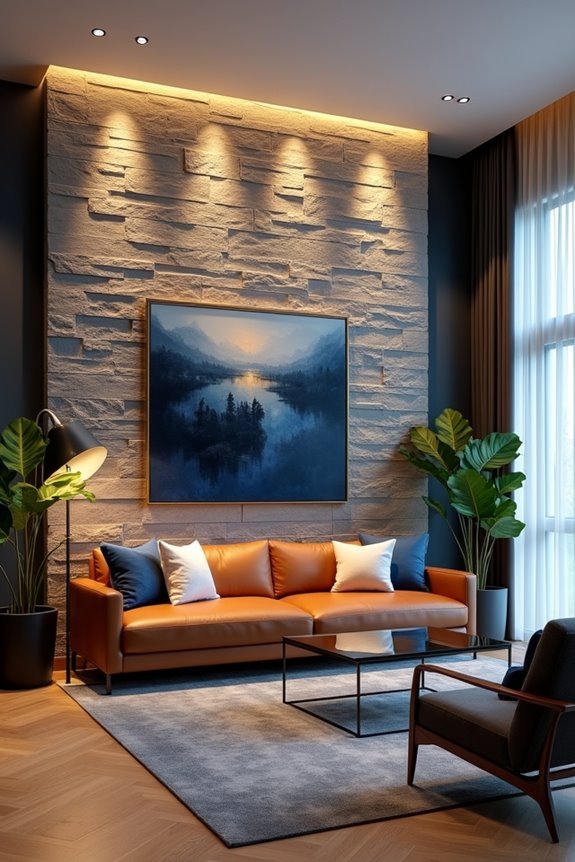
Strategic uplighting transforms ordinary walls into architectural focal points by directing concentrated light beams upward along textured surfaces. You’ll achieve dramatic effects when positioning fixtures at floor level, creating vertical light washes that emphasize stone, brick, or wood grain patterns. Consider spacing your uplights 24-36 inches apart for uniform coverage, adjusting distances based on ceiling height and desired intensity.
Your wall design benefits from narrow beam angles that graze surfaces, revealing dimensional qualities invisible under ambient lighting. Install fixtures with adjustable heads to fine-tune projection angles between 30-45 degrees. These uplighting techniques work exceptionally well on accent walls featuring three-dimensional materials or bold paint colors. You can layer this approach with horizontal lighting to create depth, ensuring your statement wall commands attention while maintaining balanced room illumination.
Rope Lights Outline Pathways
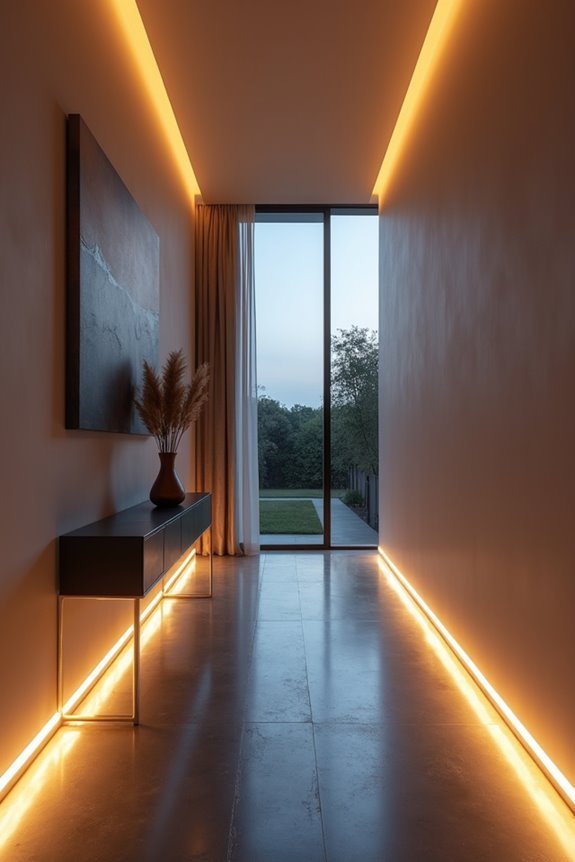
When you need to guide movement through shifting spaces, rope lights deliver both functional wayfinding and ambient enhancement through flexible linear illumination. You’ll find these versatile fixtures excel at defining edges along baseboards, stairways, and corridor passages where conventional lighting falls short.
Creative placement transforms practical pathways into architectural features. Mount rope lights beneath handrails to illuminate treads while maintaining visual flow, or position them along wall-floor junctions to create continuous guidance without disrupting sightlines. The ambient glow they produce guarantees safe navigation while contributing subtle atmospheric depth.
Consider color temperature carefully—warmer tones integrate seamlessly with residential settings, while cooler hues suit contemporary commercial environments. Dimmable options provide adaptability across different times and activities, maximizing both utility and aesthetic impact throughout your space.