

Picture yourself stepping through your front door as warm light cascades from above, instantly transforming your arrival into an experience rather than a simple entrance. Your entryway’s lighting design sets the tone for your entire home, yet it’s often the most overlooked space in residential interiors. Whether you’re working with soaring ceilings or compact dimensions, the right combination of fixtures, placement strategies, and lighting layers can elevate this passage zone into something truly memorable.
Statement Chandeliers Create Drama
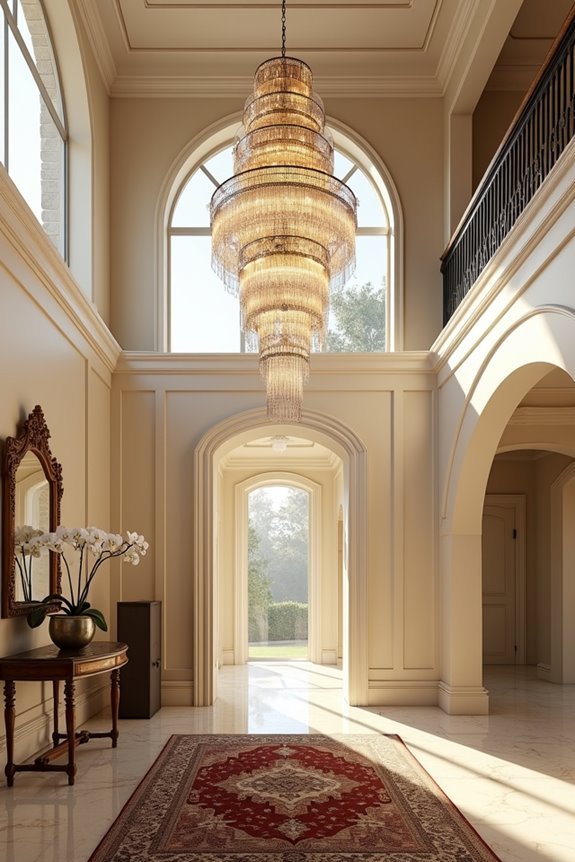
A grand chandelier transforms your entryway from functional passage into architectural moment. You’ll anchor your space with fixtures that command attention through scale, materiality, and light distribution. Bold styles featuring geometric frameworks or cascading crystals establish immediate visual hierarchy, while elegant designs in brushed metals or hand-blown glass demonstrate refined taste. Layered lighting creates depth and eliminates unwanted shadows in your entrance hall.
Consider your ceiling height when selecting proportions—multiply your foyer’s square footage by 2.5 to determine ideal diameter in inches. Layer ambient illumination with accent lighting to prevent harsh shadows. Install dimmer controls for adaptability across different times and occasions. Your chandelier’s positioning matters: center it within the room’s footprint, maintaining minimum seven-foot clearance from floor to fixture base for best traffic flow and visual balance.
Layered Lighting Adds Depth
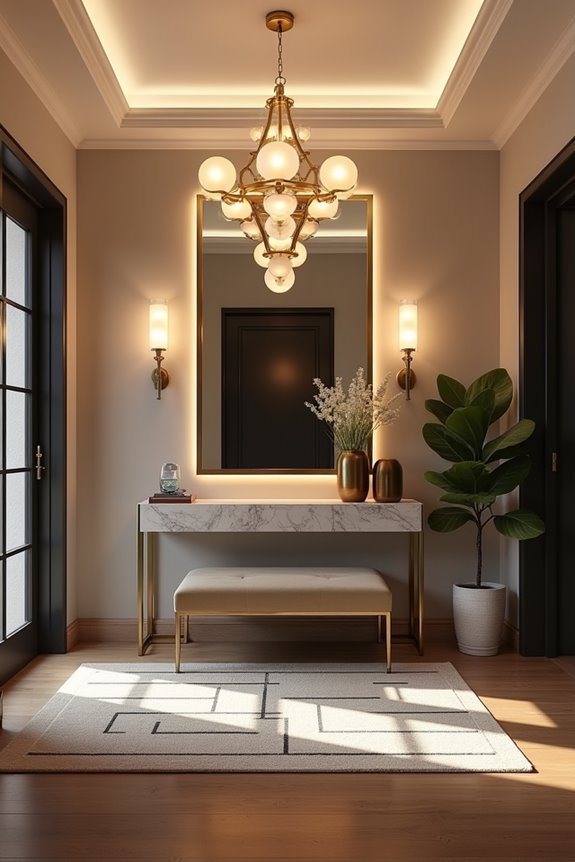
While statement chandeliers provide your entryway’s focal point, true design sophistication emerges when you combine multiple light sources at varying heights and intensities. You’ll achieve peak illumination by incorporating ambient layers through recessed downlights or wall sconces positioned at mid-level heights. These secondary fixtures eliminate harsh shadows while establishing visual continuity throughout the space.
Strategic placement of decorative accents—such as picture lights highlighting artwork or LED strips beneath console tables—introduces dimensional interest. You’re creating depth by directing attention to architectural features and curated objects. motion sensors can enhance both energy efficiency and convenience by automatically controlling your layered lighting scheme. This multi-tiered approach produces balanced illumination that’s both functional and aesthetically refined. Consider installing dimmer switches to control each layer independently, allowing you to adjust the atmosphere based on time of day or occasion while maintaining consistent design harmony.
Pendant Lights for Low Ceilings
Pendant Lights for Low Ceilings
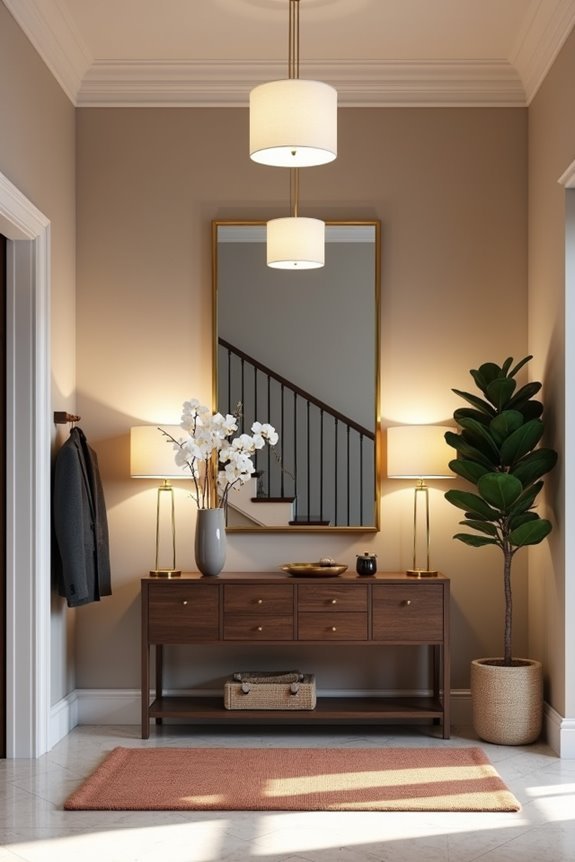
Low-ceiling entryways demand precise pendant selection to maximize vertical clearance without sacrificing design impact. You’ll need fixtures with shallow canopies and compact profiles that maintain the required 7-foot minimum clearance from floor to bottom of fixture. Flush-mount pendants and semi-flush designs work exceptionally well for ceiling heights between 7 and 8 feet, offering the visual interest of suspended lighting without excessive drop. Smart lighting systems can enhance functionality by allowing automated dimming control for different times of day.
Consider drum-style pendant styles with abbreviated downrods or direct-mount options that eliminate the rod entirely. Mini pendants clustered in odd numbers create sculptural appeal while preserving headroom. For 8-foot ceilings, you can incorporate adjustable-height fixtures, allowing customization based on your specific spatial constraints. Prioritize fixtures with upward light distribution to create the illusion of height while providing adequate illumination for safe passage.
Sconces Flank Mirrors Beautifully
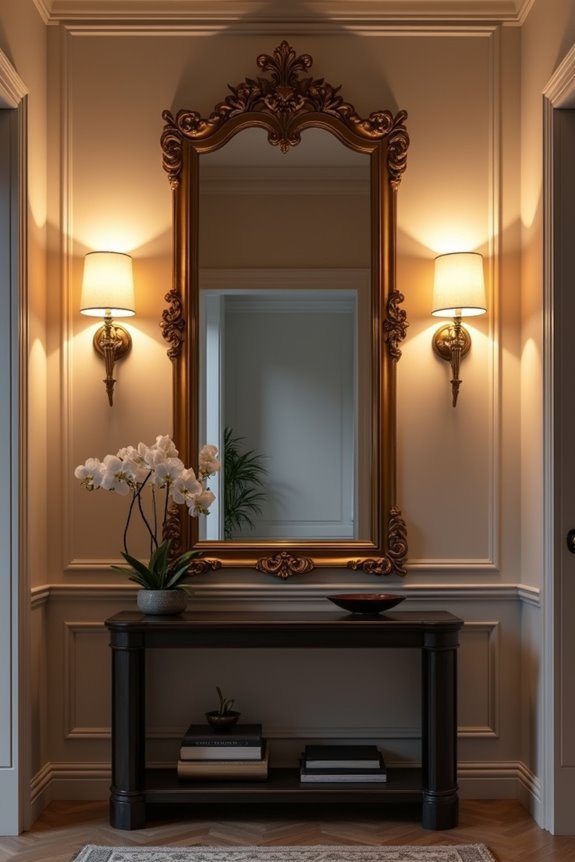
Strategic sconce placement transforms entryway mirrors into luminous focal points while delivering practical task lighting for final appearance checks before departure. You’ll want to position sconces 60-65 inches from the floor and 28-36 inches apart, ensuring even facial illumination without harsh shadows. Traditional mirror placement works best with coordinating sconce styles—contemporary linear fixtures complement frameless mirrors, while ornate brass sconces enhance vintage frames. Consider swing-arm models for adjustable lighting angles, or fixed backplate designs for streamlined aesthetics. Install sconces 4-6 inches from mirror edges to prevent glare while maximizing light distribution. Choose frosted or fabric shades to diffuse illumination evenly across reflective surfaces. Geometric lighting fixtures can add modern architectural interest while maintaining functional illumination. This symmetrical arrangement creates visual balance while elevating your entryway’s architectural sophistication through layered lighting design.
Recessed Lights Provide Clean Lines
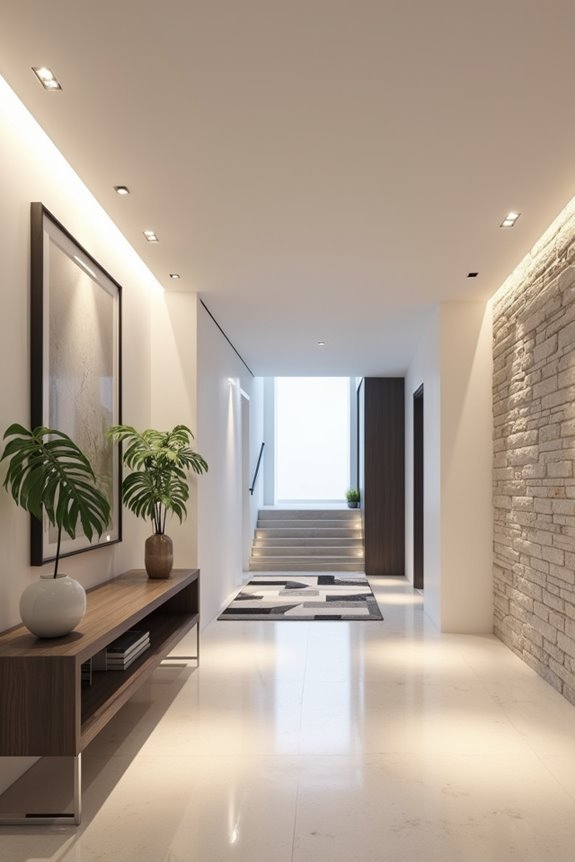
Recessed lighting delivers architectural minimalism through flush-mounted fixtures that eliminate visual clutter in contemporary entryways. You’ll achieve ideal illumination by strategically planning recessed light positioning before construction or renovation begins. Space fixtures 4-6 feet apart for uniform coverage, positioning them 18-24 inches from walls to prevent shadows and highlight vertical surfaces effectively.
Professional recessed lighting installation requires careful consideration of ceiling depth, as most housings need 6-8 inches of clearance. You’ll want to select IC-rated fixtures for insulated ceilings and choose appropriate trim styles—baffle trims minimize glare while reflector trims maximize light output. Creating lighting layers with a mix of ambient and accent fixtures ensures a welcoming atmosphere in your entryway. Dimmer compatibility enhances versatility, allowing you to adjust ambient levels throughout the day. LED options provide energy efficiency and longevity, reducing maintenance requirements while delivering consistent color temperatures that complement your entryway’s design scheme.
Table Lamps Add Warmth
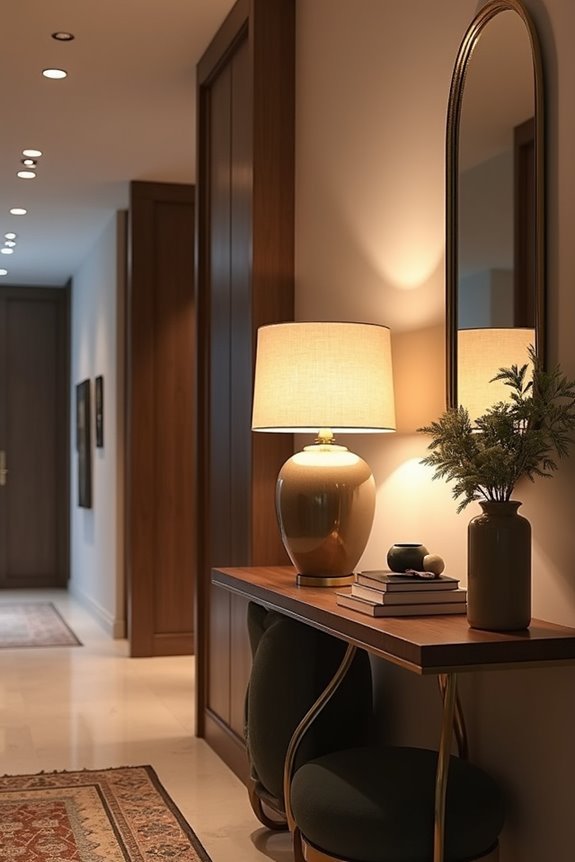
While recessed fixtures excel at architectural integration, table lamps introduce tactile dimension and layered illumination that transforms your entryway from merely functional to genuinely welcoming. You’ll achieve superior results by positioning lamps on console tables at 58-62 inches from floor to shade bottom, ensuring proper scale relationship with surrounding furnishings. Contemporary tabletop designs featuring ceramic, brass, or sculptural bases serve dual purposes as decorative objects and light sources. Select lampshades in neutral tones to diffuse ambient colors throughout the space, or choose translucent materials that cast warm glows against adjacent walls. Consider dimmable LED bulbs rated at 2700K for adjustable atmosphere. Strategic lamp placement creates visual anchors that guide guests inward while establishing intimate zones within larger entryway volumes. Just as with proper mirror lighting in bathrooms, balanced illumination from multiple sources helps eliminate harsh shadows and creates a more flattering environment.
Natural Light Maximizes Brightness
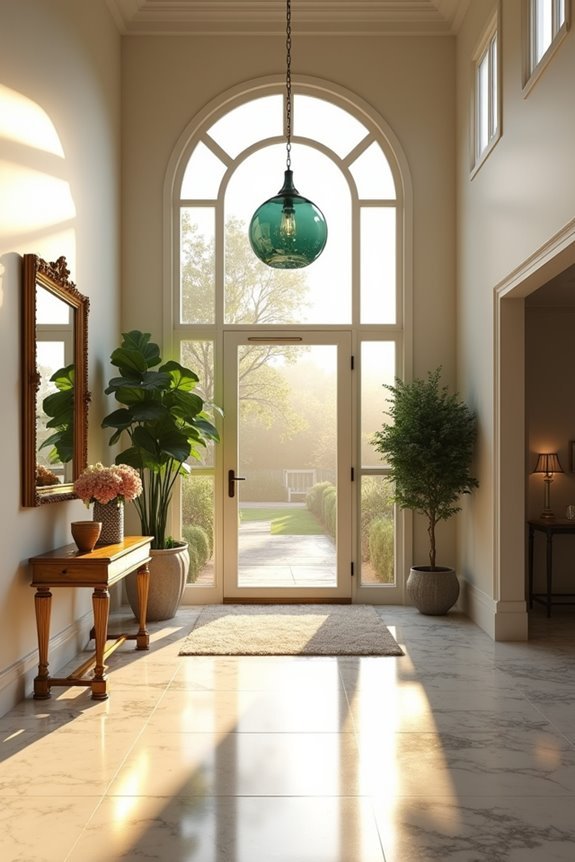
Harnessing daylight through intentional architectural planning reduces your dependence on artificial illumination while establishing dynamic visual interest that changes throughout the day. Strategic placement of windows, skylights, and glass transoms amplifies natural light benefits by channeling sunlight deeper into your entryway’s core zones. Consider installing sidelights flanking your entry door or implementing clerestory windows above standard sight lines to maximize vertical light distribution without compromising privacy.
Light-reflective surfaces—glossy paint finishes, mirrors, metallic accents—multiply available brightness through strategic reflection patterns. You’ll achieve peak results by positioning these elements perpendicular to primary light sources. Glass interior doors and borrowed light panels transfer illumination from adjacent rooms, effectively maximizing natural brightness throughout interconnected spaces while maintaining architectural definition between functional zones. For added sophistication, consider incorporating emerald glass fixtures that create stunning color plays when natural light streams through them.
Track Lighting Highlights Artwork
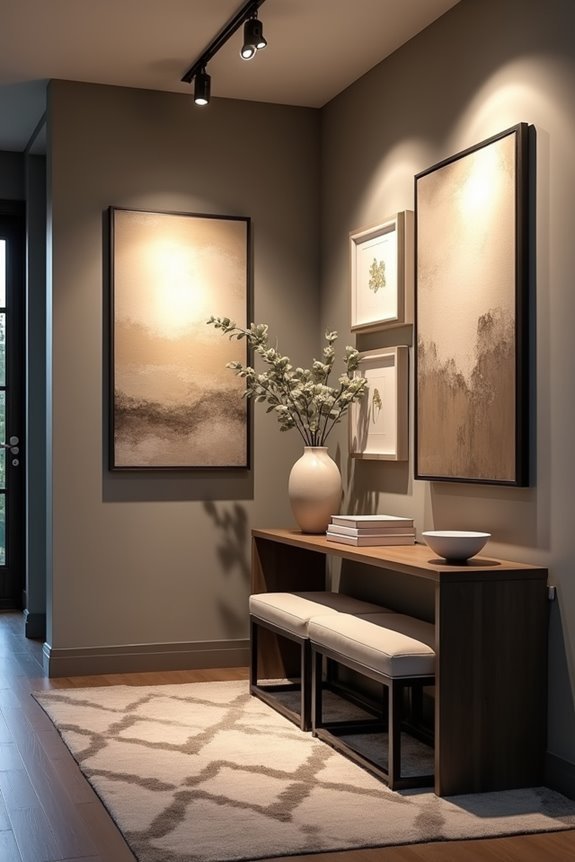
Adjustable track lighting systems deliver precision illumination control that transforms your entryway artwork into commanding focal points through calculated beam angles and strategic light placement. You’ll achieve gallery-quality results by positioning fixtures 30 degrees from wall surfaces, eliminating glare while maximizing color vibrancy and texture definition.
Modern track options include low-voltage systems offering enhanced dimming capabilities and reduced energy consumption, while standard line-voltage configurations provide straightforward installation flexibility. Geometric configurations can create dramatic visual interest while maintaining functional lighting coverage. Consider your artwork placement when selecting track configurations—single-circuit designs suit uniform lighting requirements, whereas multi-circuit systems enable independent control of multiple pieces.
Professional-grade LED fixtures with 90+ CRI ratings guarantee accurate color rendering, preserving artistic integrity. Install tracks 24-36 inches from walls to optimize beam spread and minimize shadowing effects across varied frame dimensions and surface textures.
Smart Dimmers Control Ambiance
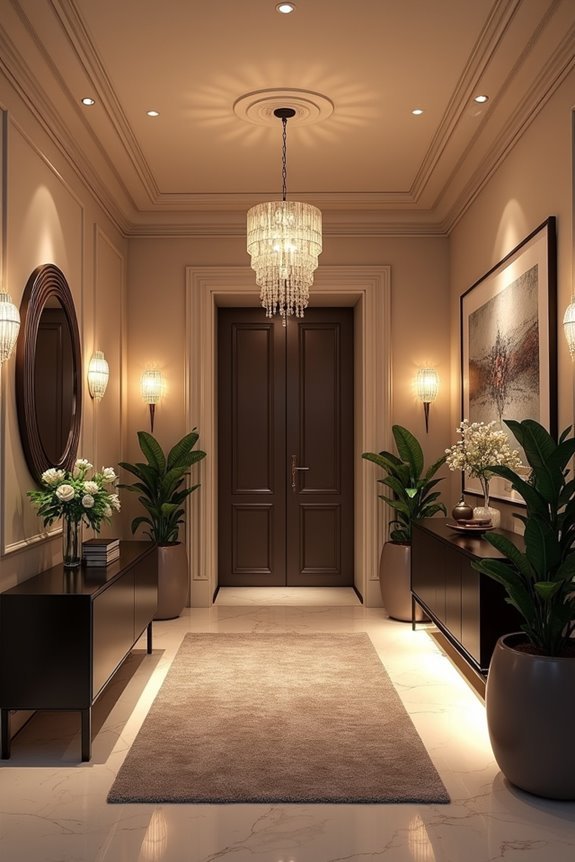
Because entryway lighting demands must shift throughout the day, smart dimmer technology provides seamless ambiance adaptation through app-based controls, voice commands, and automated scheduling protocols. You’ll integrate lighting control systems that respond to occupancy sensors, automatically brightening when you arrive home and dimming during nighttime hours. These smart home automation solutions connect multiple fixtures simultaneously, enabling scene creation for different occasions—bright illumination for welcoming guests versus subdued lighting for evening changes.
Modern dimmer switches feature LED-compatible circuitry, preventing flickering and extending bulb longevity. You can program gradual fade sequences that simulate natural daylight patterns, enhancing your entryway’s visual comfort. accent lighting techniques can highlight architectural features while complementing your dimmer system’s capabilities. Advanced systems remember your preferences, learning usage patterns to optimize energy consumption while maintaining desired atmospheric conditions throughout your home’s primary threshold.
Floor Uplights Create Drama
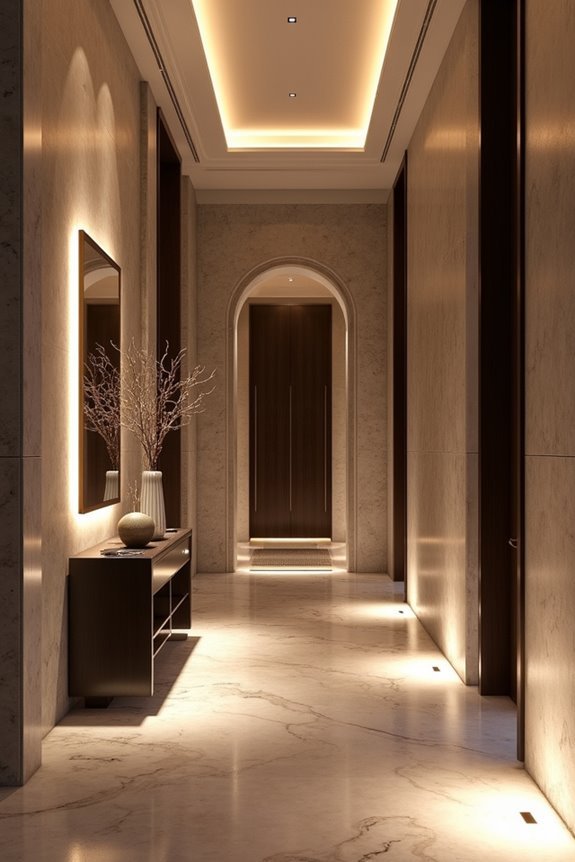
Strategic placement of floor uplights transforms vertical architectural elements into dramatic focal points, casting shadows that accentuate texture and dimensionality within your entryway’s spatial composition.
You’ll achieve maximum impact by positioning these fixtures at column bases, flanking doorways, or highlighting architectural niches. The upward illumination gradient creates compelling color contrast against darker ceiling planes while emphasizing ceiling height. Select narrow beam angles (15-30 degrees) for concentrated architectural highlighting, or wider distributions (40-60 degrees) for wall washing effects.
Consider your floor design when specifying fixtures—recessed canister uplights integrate seamlessly into stone or tile installations, while surface-mounted options suit existing hardwood layouts. Adjustable beam fixtures provide flexibility for seasonal décor changes. Install dimmable LED systems to modulate intensity and maintain energy efficiency throughout varying usage patterns. For enhanced security and convenience, incorporate motion-sensor technology that automatically adjusts lighting levels when movement is detected.
LED Strips Outline Architectural Features
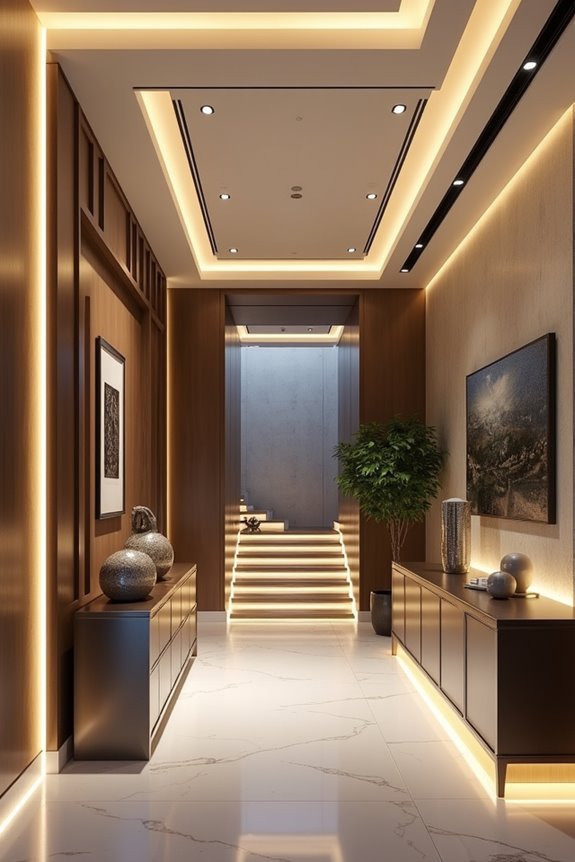
Concealed LED strip lighting delivers precision-edged illumination that defines your entryway’s architectural geometry with linear continuity. Install these flexible luminaires within recessed channels along crown molding, baseboards, or coffered ceiling details to generate architectural highlights that emphasize dimensional depth. The concentrated beam angles create clean light lines without visible fixtures, maintaining your design’s minimalist aesthetic.
You’ll achieve ideal ambient glow by selecting color temperatures between 2700K and 3000K, which complement residential finishes without clinical harshness. Dimming controls let you modulate intensity from subtle accent to functional illumination. Position strips behind floating stair treads, within wall niches, or along column perimeters to trace structural elements with luminous definition. This technique transforms static architectural components into dynamic focal points while providing practical wayfinding through controlled brightness gradients.
Lanterns Add Vintage Charm
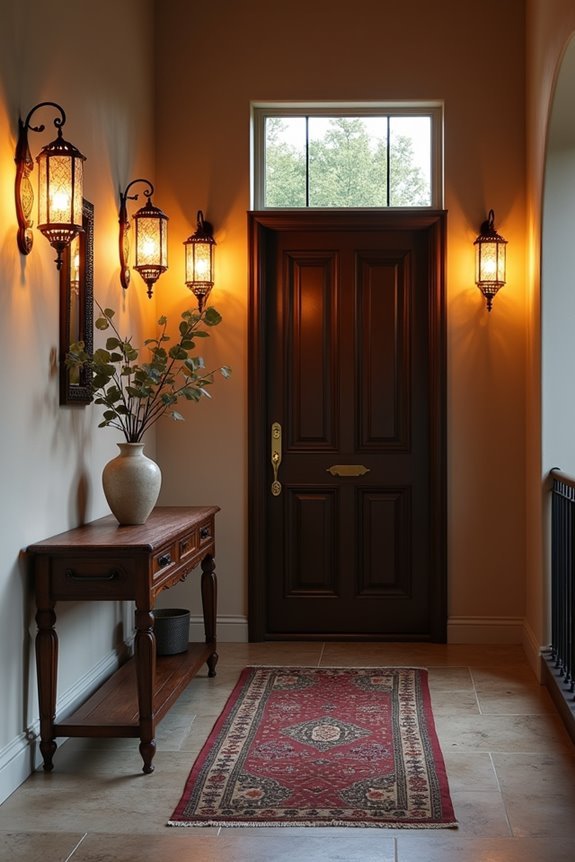
Traditional lantern fixtures introduce period-specific character to contemporary entryways through their distinctive enclosure designs and material compositions. You’ll find wrought iron frames deliver rustic charm while establishing visual weight at doorways, whereas polished brass variants contribute refined accents that complement modern elegance. The enclosed glass panels protect bulbs from weather exposure while diffusing light evenly across entry zones.
You can mount these fixtures as wall sconces flanking doorframes or suspend them from overhead brackets for dramatic vertical emphasis. Beveled glass panes create prismatic effects that enhance ambient illumination, while seeded glass textures add dimensional interest. Black powder-coated finishes integrate seamlessly with industrial aesthetics, and antique bronze patinas reinforce traditional architectural themes. Select proportions that align with your door scale—oversized lanterns suit grand entrances, compact designs serve modest thresholds.
Wall Washers Illuminate Textures
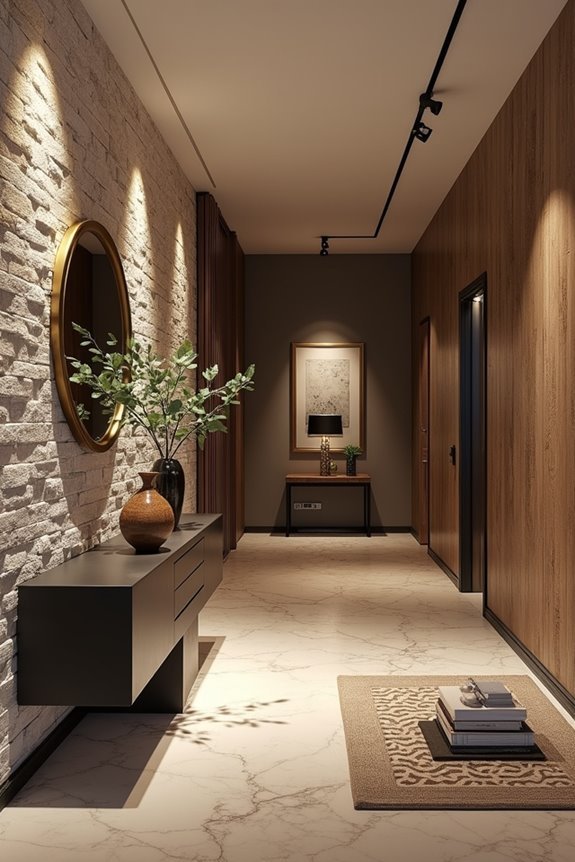
Wall washers project uniform illumination across vertical surfaces to accentuate architectural features and material finishes in entryway spaces. You’ll achieve ideal texture highlights by positioning these fixtures 12-18 inches from walls, creating controlled light that grazes surfaces at precise angles. This technique reveals dimensional qualities in stone, brick, wood paneling, or textured plaster through strategic shadowing and wall reflections.
Install linear LED wall washers with narrow beam spreads (15-30 degrees) to maximize surface coverage while minimizing light spill. You can adjust color temperatures between 2700K-3000K to complement warm materials or select 3500K-4000K for contemporary finishes. Dimming capabilities let you control intensity based on natural daylight levels. Consider recessed or track-mounted configurations depending on your ceiling height and architectural constraints for seamless integration.
Skylights Illuminate Vertical Spaces
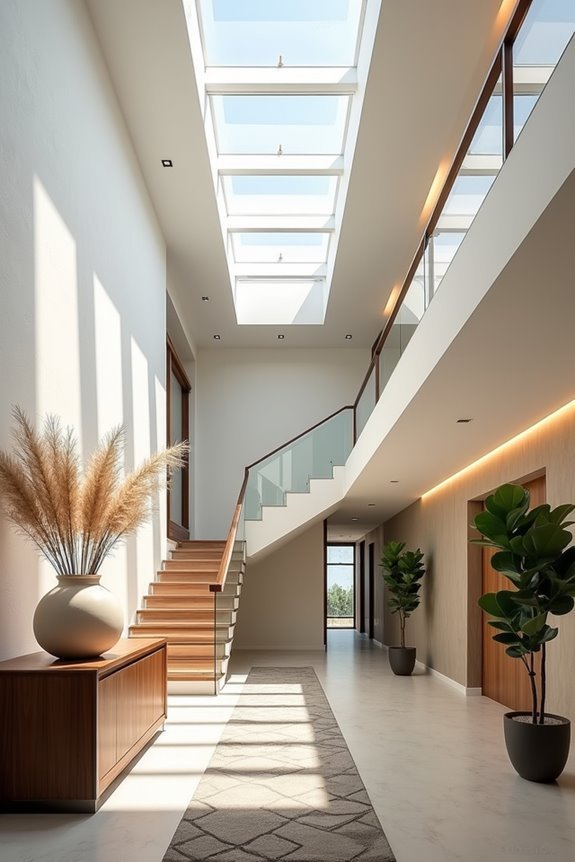
When installed above entryway corridors, skylights transform vertical circulation spaces by channeling natural illumination downward through multi-story voids. You’ll maximize skylight benefits by selecting units with high-performance glazing that controls heat gain while transmitting ideal daylight. Position tubular skylights in narrow passages where traditional windows aren’t feasible, directing concentrated light through reflective shafts.
For dramatic vertical illumination, specify linear skylight systems that follow stairwell geometry, creating rhythmic light patterns on adjacent walls. You’ll reduce daytime energy consumption while establishing dynamic lighting conditions that shift with sun angles. Consider automated shading systems to prevent glare during peak hours. Install complementary artificial lighting on dimmer controls, allowing you to supplement natural light during overcast conditions or evening hours, maintaining consistent illumination throughout daily cycles.
Cove Lighting Softens Entries
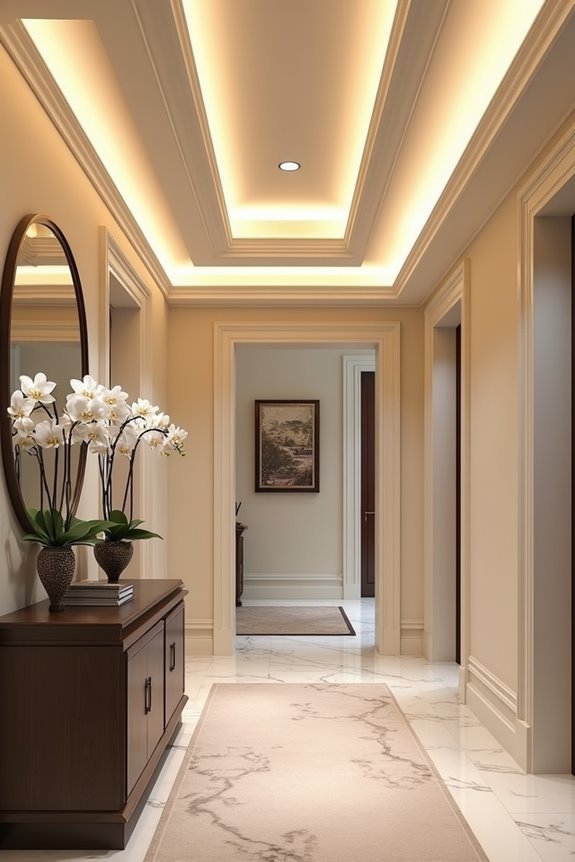
Concealed within architectural recesses, cove lighting delivers indirect illumination that eliminates harsh shadows and creates ambient warmth in entry spaces. You’ll achieve sophisticated depth by installing LED strips within crown moldings, ceiling trays, or wall niches positioned 12-18 inches from vertical surfaces.
This technique transforms your entryway through reflected light that bounces off adjacent planes, producing an ambient glow without visible fixtures. You can specify color temperatures between 2700K-3000K for inviting warmth, or incorporate RGB-capable systems for dynamic control.
The installation requires careful planning of electrical routing and dimming infrastructure. You’ll maximize impact by pairing cove elements with accent lighting on artwork or architectural features. This layered approach establishes visual hierarchy while maintaining the serene, shadow-free atmosphere that defines refined entryway design.