Your home’s lighting design can make or break the entire ambiance of your living space. When you’re planning illumination throughout each room, you’ll need a strategic approach that balances functionality with aesthetic appeal. From task-focused kitchen fixtures to mood-enhancing living room layers, proper lighting transforms ordinary spaces into extraordinary environments. Let’s explore how specific lighting choices in each area of your home can dramatically improve both form and function.
Essential Kitchen Task Lighting
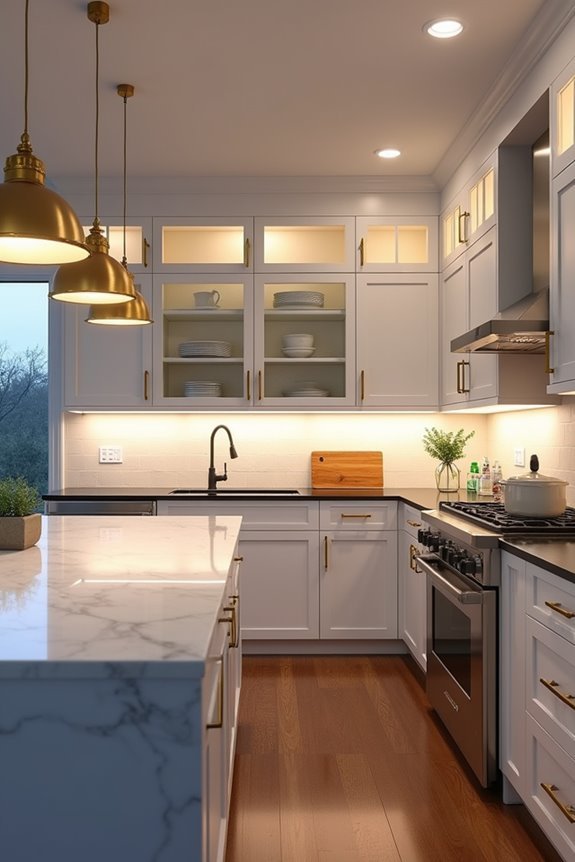
When planning kitchen task lighting, you’ll need strategic illumination for key work zones like countertops, islands, and sink areas. Position recessed downlights 24-30 inches from the wall to eliminate shadows on work surfaces. Under-cabinet LED strips provide essential task lighting while reducing countertop glare. Motion sensor lights can add convenience while helping conserve energy in busy kitchen spaces.
For kitchen island illumination, install pendant lights at 30-36 inches above the surface, spacing them evenly for balanced coverage. Select fixtures that direct light downward for ideal task performance. Install cabinet accent lights inside glass-front cabinets to highlight dishware while adding depth to your lighting scheme. Consider dimmers for all task lighting to adjust intensity based on time of day and specific cooking needs. Make sure color temperatures remain consistent across all fixtures, ideally between 2700K-3000K for warm, inviting light.
Layered Living Room Lighting
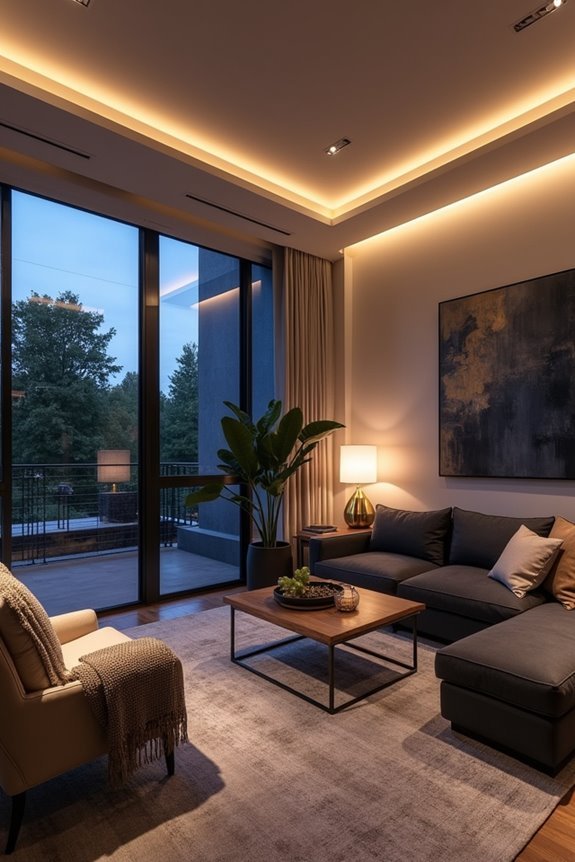
A well-designed living room requires three essential lighting layers: ambient, task, and accent illumination. Begin with ambient light sources like recessed downlights or a central chandelier to establish overall room brightness. Then, incorporate task lighting through floor lamps near reading areas and table lamps beside seating arrangements.
Complete your lighting scheme with accent fixtures that highlight architectural features, artwork, or decorative elements. LED strip lights offer a modern solution for creating dramatic cove lighting effects along walls and ceiling edges. You’ll want to select fixture styles that complement your interior design while maintaining proper light distribution. Consider installing dimmers to adjust each layer’s intensity throughout the day. Position your ambient lighting to wash walls evenly, task lights at proper heights for their intended use, and accent lighting at ideal angles to create visual interest. This layered approach guarantees your living room is both functional and aesthetically pleasing.
Bathroom Mirror Sconce Placement
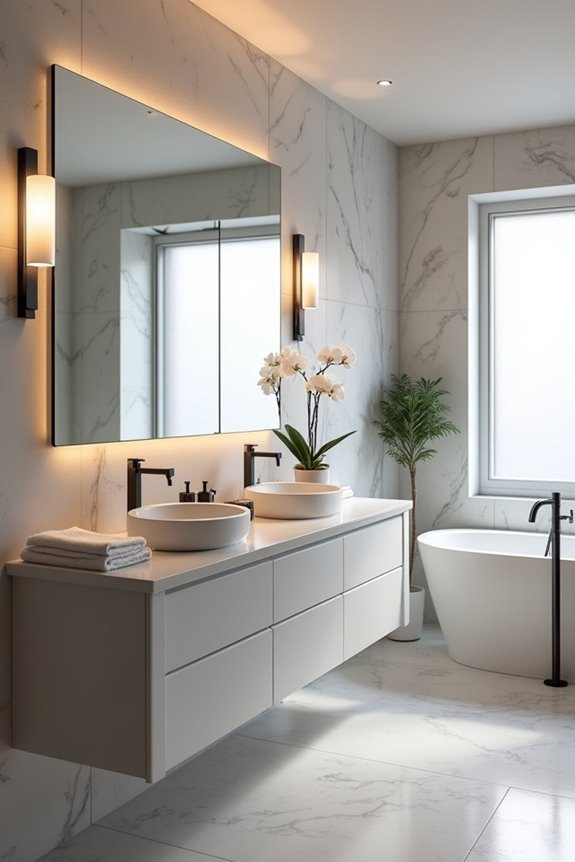
Proper sconce placement around bathroom mirrors requires careful attention to both function and aesthetics. When mounting sconces, position them at eye level, typically 60-65 inches from the floor, aligning with your mirror height. You’ll want to install sconces 28-30 inches apart, maintaining placement symmetry on either side of the mirror for balanced illumination.
Choose your sconce style based on your wall texture and overall bathroom design. For ideal lighting temperature, select fixtures that provide both ambient and task lighting – warm white LEDs between 2700K-3000K work best. Consider bulb wattage carefully; each sconce should deliver 75-100 watts equivalent of illumination to eliminate shadows and provide adequate lighting for grooming tasks. Guarantee the sconces don’t create glare by positioning them slightly forward from the mirror’s surface. backlit mirror options can provide an additional layer of elegant ambient lighting while complementing your sconce arrangement.
Bedroom Reading Light Placement
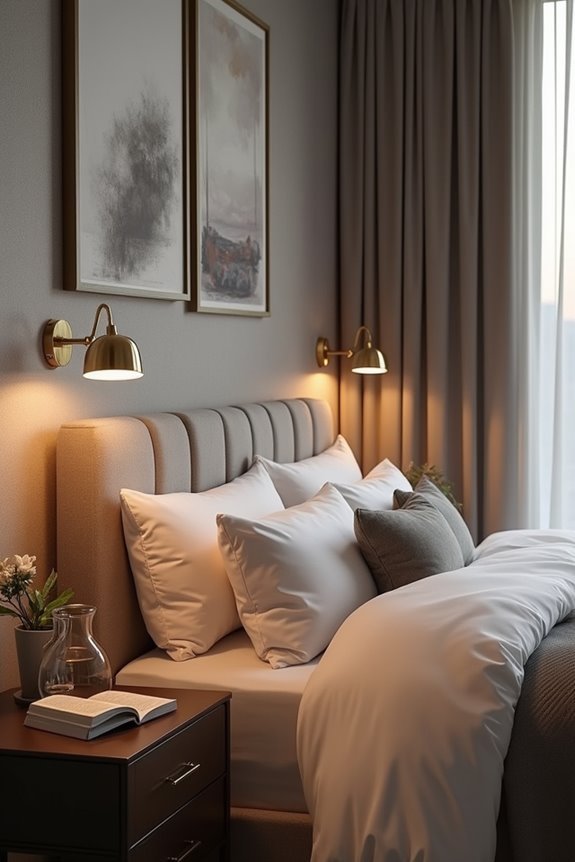
Moving from bathroom illumination to bedroom comfort, strategic reading light placement transforms your nighttime routine. Position adjustable wall sconces 24-30 inches above your mattress and 6-8 inches from the headboard’s edge for ideal illumination without glare. You’ll want the light source to sit slightly behind your shoulder when you’re propped up reading. Similar to a vanity lighting setup, proper positioning helps prevent eye strain and creates optimal visibility.
For maximum flexibility, install dimmable fixtures with swing arms that extend 12-14 inches from the wall. This allows you to direct light precisely where you need it. When selecting ambient bedside lighting, consider both task and atmospheric requirements. Choose fixtures that provide 400-800 lumens for reading, while maintaining the room’s restful ambiance. Multi-function controls let you adjust brightness levels from energizing to sleep-inducing as evening progresses.
Outdoor Path Safety Lights
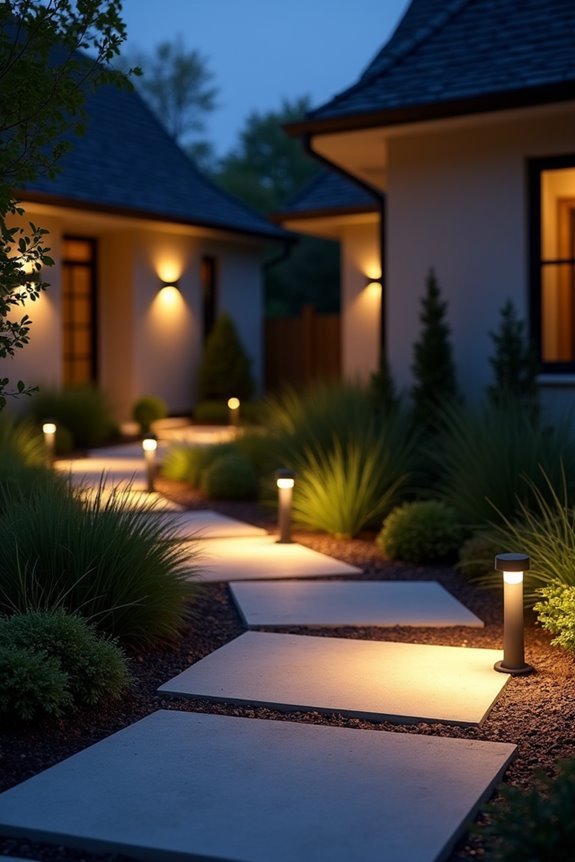
Safe outdoor pathways require strategic illumination that guides movement while enhancing your home’s nighttime appeal. Position low-voltage LED fixtures every 6-8 feet along walkways, ensuring overlapping light pools for consistent coverage. You’ll want to mount lights 14-18 inches from path edges to prevent trip hazards while maintaining clean path aesthetics. Just as pendant lighting placement transforms kitchen spaces, proper outdoor light positioning creates visual impact.
Consider installing motion sensors in less-trafficked areas to conserve energy while maintaining security. Select fixtures with downward-facing shields to minimize light pollution and glare. For ideal outdoor illumination, layer your lighting by combining path lights with accent fixtures that highlight landscape features. Choose warm color temperatures between 2700K-3000K to create an inviting atmosphere that won’t interfere with your natural night vision or disturb local wildlife.
Dimmable Dining Room Chandelier
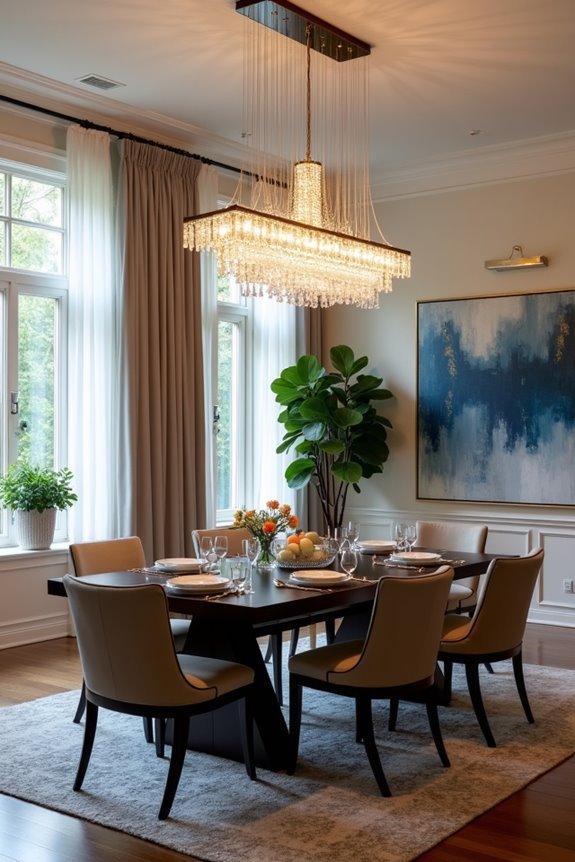
From outdoor ambiance to indoor elegance, the dining room chandelier sets the tone for memorable gatherings. You’ll want to select a dimmable fixture that complements your dining room’s scale and décor while providing flexible lighting control for different occasions.
Multiple small pendants arranged in an elegant cluster can create dramatic visual impact above dining tables. When considering chandelier styles, focus on pieces that hang 30-36 inches above your table’s surface. For ideal lighting placement, choose a fixture that’s approximately one-third the width of your table. You’ll need a chandelier that provides both ambient light for everyday use and softer illumination for intimate dinners. Modern options include traditional crystal designs, contemporary LED arrangements, and industrial-inspired pieces. Install a quality dimmer switch to transform your space from bright family meals to romantic dining experiences with precise control over light intensity.
Home Office Desk Lighting
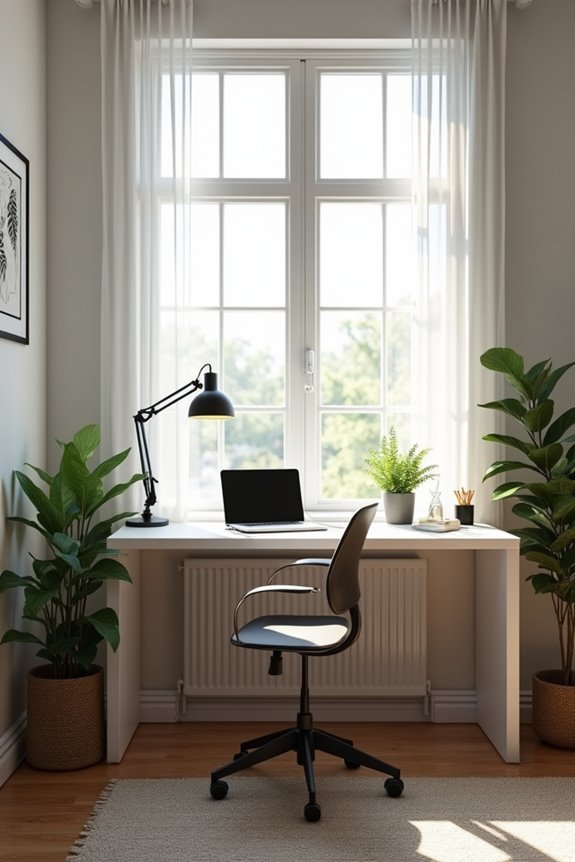
Proper desk lighting transforms your home office into a productive workspace while minimizing eye strain during long work sessions. You’ll want to position your primary light source to eliminate shadows and reduce screen glare. Install an ergonomic desk lamp with a flexible arm that allows you to direct light precisely where you need it most.
Choose lighting fixtures with adjustable brightness settings to accommodate different tasks throughout your day. For video calls, you’ll need sufficient front-facing illumination, while detailed work may require focused task lighting. Position your desk perpendicular to windows when possible to maximize natural light without creating screen reflections. Similar to pendant fixtures in bedrooms, suspended desk lights can save valuable workspace while providing targeted illumination. Complement your desk lamp with ambient ceiling lighting to maintain consistent illumination levels throughout your workspace, creating a balanced lighting environment that supports both productivity and visual comfort.
Mood-lit Theater Room Fixtures
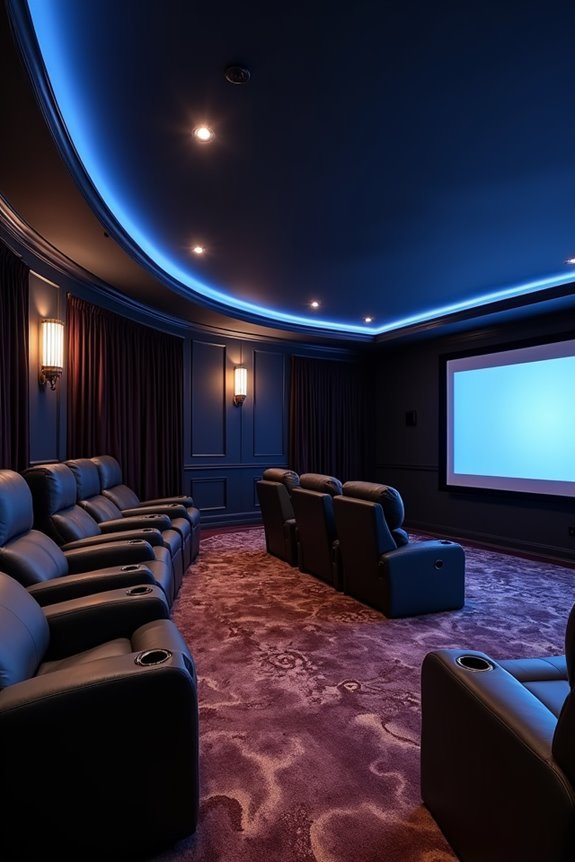
Creating the perfect theater room ambiance requires strategic placement of layered lighting fixtures that you can independently control. Install dimmable theater wall sconces at 42-inch heights, spacing them evenly along side walls to provide subtle pathways while maintaining dark viewing conditions. Position these fixtures every 6-8 feet for ideal coverage.
Smart lighting systems enable precise control over dramatic effects while maintaining optimal viewing conditions. Incorporate recessed ambient ceiling lights on multiple circuits – one for general illumination when entering the space, and another for subtle background lighting during viewing. You’ll want to place these fixtures at least 4 feet away from the screen to prevent unwanted glare. Install LED strip lighting behind crown molding to add depth, and consider step lights along floor edges for safety. Connect all fixtures to a programmable control system for seamless changes between lighting scenes.
Ceiling-mounted Staircase Light Fixtures
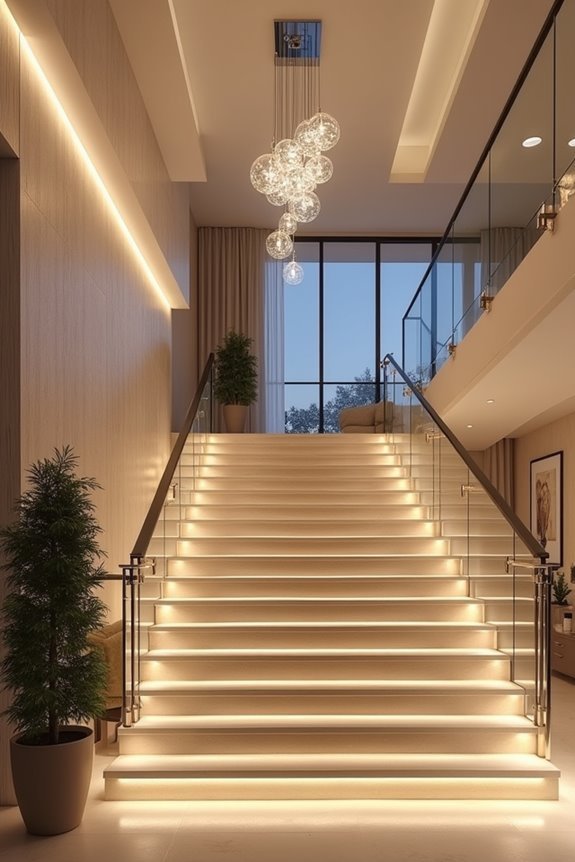
When illuminating multi-level spaces, ceiling-mounted staircase fixtures serve as both functional safety elements and architectural focal points. You’ll want to position fixtures at consistent intervals to eliminate shadows and guarantee proper foot visibility on each step, enhancing staircase safety while maintaining aesthetic appeal.
Consider installing LED downlights with beam spreads between 25-40 degrees to create overlapping pools of light. You’ll achieve superior illumination by mounting them 24-30 inches from the wall, spacing them 4-6 feet apart vertically. Motion-sensor fixtures can further enhance safety and energy efficiency by automatically illuminating stairs only when needed. Modern pendant clusters work well in taller stairwells, while flush-mounted fixtures suit lower ceiling heights. For maximum impact, select fixtures that complement your home’s architectural style while providing the recommended 100 lumens per square foot for safe navigation.
Dimmed Hallway Night Lights
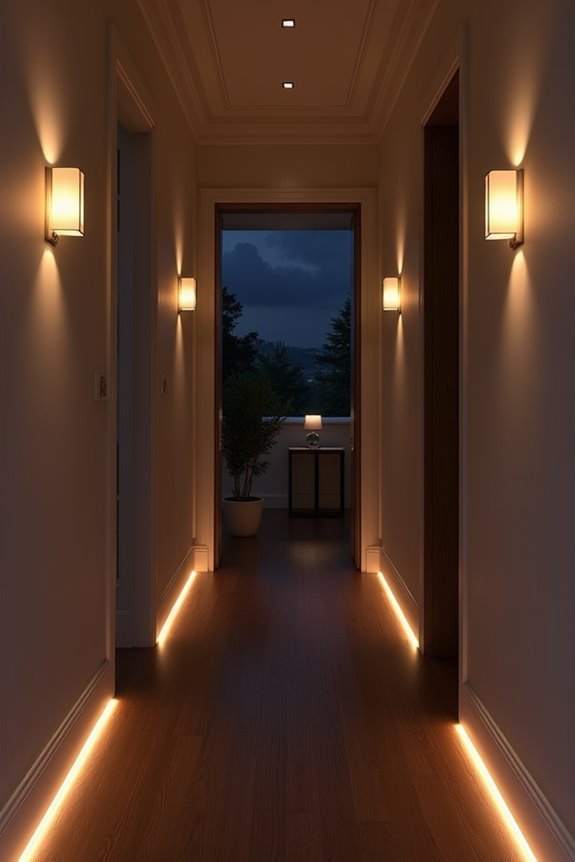
Safety lighting doesn’t end at the staircase – your hallways need thoughtful illumination for nighttime navigation too. When planning your hallway design, consider installing LED night lights at baseboard level, spaced every 6-8 feet. These low-profile fixtures create a subtle guide path without disrupting sleep patterns or overwhelming sleepy eyes.
Choose from several night light types that suit your needs: motion-activated sensors that illuminate only when someone passes, photocell units that automatically adjust to ambient light levels, or programmable dimmers that maintain consistent low-level lighting throughout the night. Install them 12 inches above the floor for ideal path lighting while minimizing glare. For longer corridors, alternate placement on opposite walls to create balanced illumination that guides you safely through the space. Wall sconces offer an elegant alternative that can complement your nighttime lighting strategy while adding architectural interest during daylight hours.
Recessed Entryway Ceiling Lights
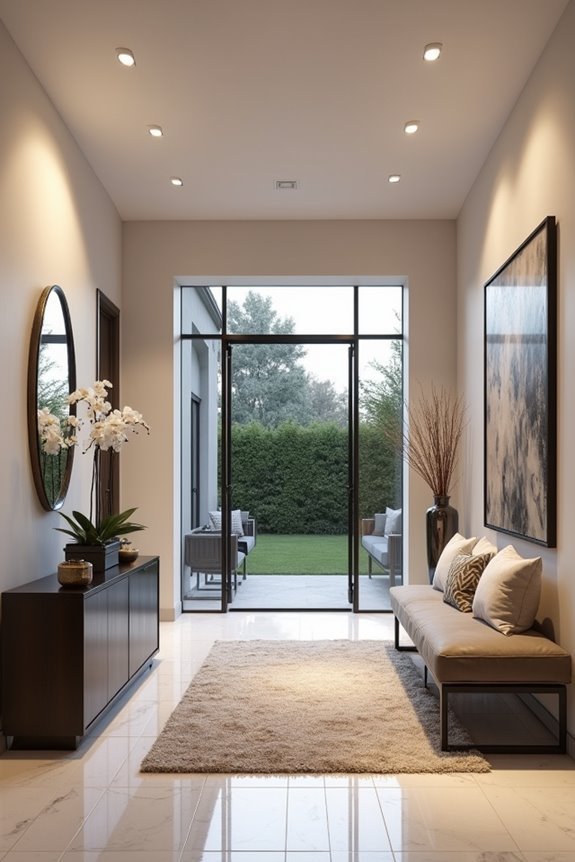
Since your entryway sets the tone for your entire home, recessed ceiling lights offer an elegant and functional lighting solution for this essential space. Position 4-inch LED downlights in a symmetrical pattern, spacing them 3 to 4 feet apart to create balanced illumination without harsh shadows.
Select from various recessed fixture styles to match your home’s aesthetic – choose between adjustable gimbals for targeted lighting or fixed trims for consistent downlighting. You’ll want to install these fixtures on a dimmer switch to control the entryway ambiance throughout the day. Consider mixing warm white (2700K) and cool white (3000K) temperatures to highlight both architectural features and artwork while maintaining a welcoming atmosphere. For taller entryways, opt for deeper housing units to minimize glare at eye level.