If you find your recessed lighting too harsh or glaring, you may wonder how to make it more comfortable. A can light baffle trim is a simple solution that helps soften and diffuse light.
It creates a more balanced and cozy ambiance. It’s especially useful in living spaces where calm, even lighting matters.
Keep reading to see how baffle trims can transform your lighting experience.
What Exactly Is a Can Light Baffle Trim?
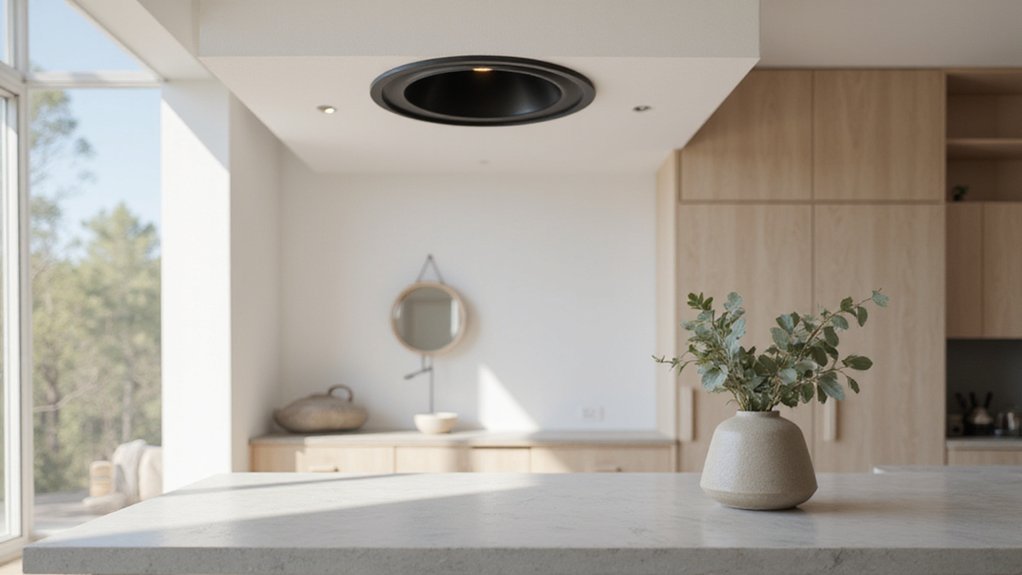
A can light baffle trim is the visible ring that finishes a recessed lighting fixture. Its ribbed or grooved interior is designed to reduce glare by diffusing the view of the lamp from below. This feature not only enhances visual comfort but also improves energy efficiency. By absorbing excess light spill and softening harsh brightness, you can often use fewer fixtures to achieve the same level of illumination, saving power without sacrificing quality. Similar to how adjusting ceiling fan direction optimizes air circulation seasonally, selecting the correct trim orientation can maximize lighting performance. For a cleaner, more customized look, you could also consider building a DIY wall sconce from wood or metal as an alternative to standard recessed fixtures. For proper installation, ensure the trim is compatible with your housing size and lamp wattage. Secure it firmly by snapping or screwing it into place, making sure it sits flush against the ceiling surface. This helps prevent light leaks, which can waste energy and diminish the glare-reducing effect. Choosing a baffle trim with a darker interior finish can further enhance its ability to minimize glare and improve overall performance. To ensure safe installation, always turn off power at the circuit breaker before handling any wiring connections.
How Does Baffle Trim Compare to Smooth Reflector Trim?
Baffle trim generally produces a softer, more diffused light compared to smooth reflector trim, which offers a brighter, more focused beam. The ribbed interior of baffle trim absorbs some light, reducing glare and eye strain—making it suitable for comfort-focused spaces like living rooms or bedrooms. In contrast, smooth reflector trim features a polished, mirror-like surface that reflects more light downward, maximizing illumination, which is ideal for task-oriented areas such as kitchens or workspaces. For a garage environment, selecting a ceiling fan with baffle trim can further enhance comfort by reducing glare from overhead lighting. For the best results, follow recessed can lighting layout tips to ensure consistent spacing and avoid dark spots. When installing a baffle trim, always follow safe wiring tips to ensure a clean and hazard-free DIY finish.
Accent color also differs between the two: baffle trim tends to hide the lamp within a darker cavity, creating a subdued look, while reflector trim often displays a bold metallic finish that highlights its reflective surface. When it comes to material durability, both types are resilient, but reflector trim’s smooth surface is easier to clean. Baffle trim’s grooves may conceal smudges or dust more effectively but require more effort to clean thoroughly. Overall, choosing between the two involves balancing the desire for reduced glare and comfort versus increased brightness and brightness control.
Why Baffle Trims Beat Reflectors (4 Big Benefits)
Baffle trims outperform reflectors in four key areas that directly impact your home’s lighting quality. First, they provide superior glare control. The ribbed interior absorbs and diffuses excess light, reducing harsh reflections and preventing squinting during tasks that require focused illumination. Second, visual comfort is greatly enhanced; baffle trims produce a softly diffused glow rather than sharp spotlights, which helps lessen eye strain and fatigue over extended periods. Third, they deliver better light distribution. The softer, more even beam creates a calm, inviting ambiance instead of overly bright or uneven light spots. This balanced spread makes living spaces feel more comfortable and natural. For those who enjoy hands-on projects, the same principles of diffused light can be applied to a DIY glass pendant light design to achieve a similar soft illumination at home. For example, when installing LED strip lights, you can use a similar diffusing technique to avoid harsh hotspots and create an even glow along the surface. Fourth, baffle trims offer practical advantages related to energy efficiency and cost savings. Because they do not push maximum output, you can opt for lower-wattage bulbs that consume less energy while maintaining an appealing light level. This means you waste less power and save money, all without sacrificing the warmth or comfort of your lighting. Overall, baffle trims provide a more balanced, comfortable, and efficient lighting solution suited for everyday residential use. This improved control over light distribution also reduces unwanted ceiling glare by minimizing direct reflection.
Best Rooms for Baffle Trim Lighting
Bedrooms benefit most from baffle trim lighting because its soft, glare-free output creates a calming environment ideal for sleep and reduces eye strain during bedside reading. Hallways also gain from this fixture type since the low-glare illumination spreads evenly, helping with wayfinding without creating harsh hotspots. Living rooms are enhanced with baffle trims as well, providing cozy ambient light that maintains a comfortable atmosphere even with multiple fixtures. Entryways and foyers become more inviting, as the soft lighting softens the overall appearance for a welcoming first impression. Nurseries and studies are well-suited too since calm, indirect lighting supports rest, focus, and relaxation. Throughout these spaces, pairing baffle trims with decorative accents adds layered lighting and visual interest. Additionally, their design helps boost energy efficiency by directing light precisely where needed, minimizing waste and excess. For a similar effect, consider incorporating best wall sconce candle holders to add a warm, decorative touch that complements the soft, indirect glow of baffle trims. If you need to aim light at specific artwork or features, choosing a track lighting track type that allows adjustable fixtures will offer even greater control over where the beam falls.
When Should You Pick Baffle Trim vs. Smooth Reflector?
Choosing between baffle trim and smooth reflector trim depends on your lighting needs. Opt for baffle trim when reducing glare and creating softer ambient light are your priorities. Its design helps absorb excess light, making it ideal for relaxation areas where eye comfort matters. Because it decreases overall light output, you might need higher-lumen bulbs to achieve your desired brightness without sacrificing energy efficiency. Baffle trims work better in spaces with lower ceilings, where harsh reflections can be a concern. For best results, follow standard spacing guidelines to ensure even coverage and avoid dark spots between fixtures. When selecting a baffle trim, consider compatible floor lamp shades that enhance the soft light effect.
On the other hand, smooth reflector trim is best suited for task-oriented spaces like kitchens or workshops. Its polished interior reflects light efficiently, amplifying brightness and making the most of your bulb’s output. This type of trim projects light further into a room, which helps illuminate larger or higher-ceilinged spaces effectively. Choose reflector trims when clear visibility and maximum lumen output are your main goals.
How to Choose Baffle Trim Size and Finish
Measure the cut-out diameter—not the visible edge—to determine your fixture’s true size. If you’re installing LED units that don’t have a separate can, measure the entire fixture itself. Choose a trim size that matches your light output needs: larger trims, like 6-inch, create a wider wash of light suitable for general illumination, while 3-inch to 4-inch trims focus the light more narrowly, ideal for accent or task lighting. Consider the size of the room and ceiling height; bigger trims are better for taller ceilings and larger spaces to ensure even coverage. Matching trim size to these factors will help you achieve both functional and aesthetic goals. For a more personalized look, you might explore pendant light DIY kits that offer customizable finishing options and hardware. If your smart lighting setup includes an Amazon Smart Plug, remember that a reset sequence is required before it can pair with a new device. For secure and reliable connections in any custom wiring work, push-in connectors provide a quick tool-free alternative to traditional twist-on wire nuts.