
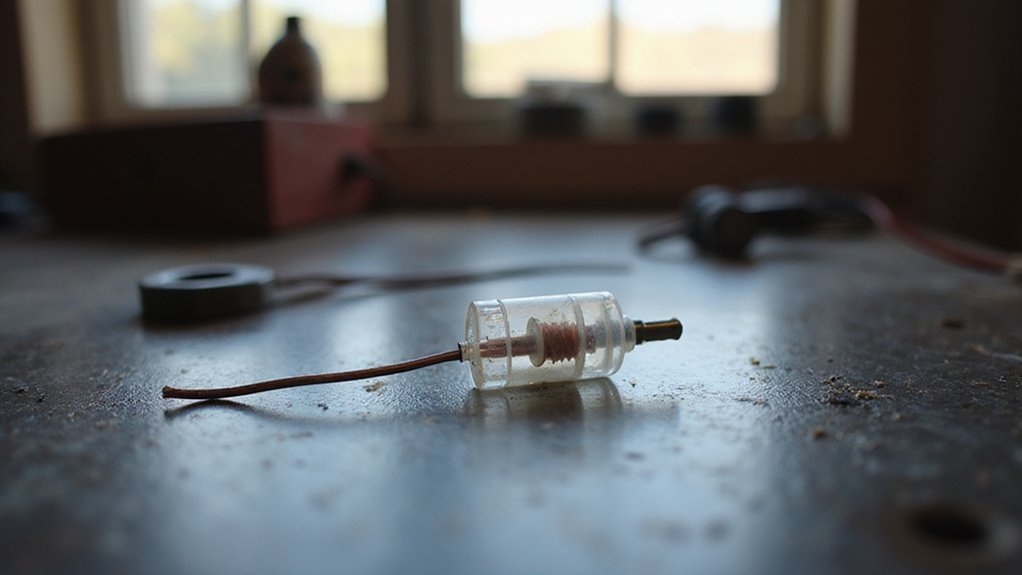
If you’re trying to decide between push-in connectors and wire nuts, safety and speed are usually top concerns.
Push-in connectors can speed up installation but may not be ideal for high-vibration or high-heat situations. In these cases, wire nuts tend to be safer.
Understanding when each option works best can help prevent fire risks and ensure a secure connection.
Keep reading to find out which connector fits your needs.
Safety: What the Code Really Says About Push-ins vs Wire Nuts
The NEC permits both push-in connectors and wire nuts when they are listed and used as intended. You are not automatically violating code by choosing one over the other, but you must adhere to specific restrictions. Always check the connector markings to verify material compatibility. Push-in terminals on receptacles and switches are limited to 14 AWG solid copper conductors only on 15-amp circuits unless marked otherwise. Wire nuts provide broader flexibility, accepting different conductor materials and sizes, as long as they match the conductor type, gauge, and circuit rating per their listing. For example, wire nuts can accommodate changing the fan direction from summer to winter without needing different connectors, ensuring compliance throughout the year. Compliance depends on using a connector that is correctly listed and rated for your application, not on the brand. It is essential to confirm that the connector’s listing matches your specific wiring needs, especially when mixing materials. Using side screws to tap off a receptacle without a pigtail violates NEC standards because they can become loose and create fire hazards, making pigtailing with approved connectors a safer method for multiple wires. A clean DIY finish is easier to achieve with push connectors because they require no twisting, but wire nuts remain the preferred choice when splicing different wire gauges or stranded conductors. To safely disconnect push-in connectors, you must insert a small flathead screwdriver into the release slot to free the wire without damaging the connector.
The Real Danger: Loose Terminations in Any Connector
Loose terminations are the primary danger, regardless of whether you’re using push connectors or wire nuts. The key issue is a connection that isn’t secure, which can turn any electrical joint into a fire hazard. When a connection is loose, it creates high resistance and results in localized hot spots as heat builds under normal load. Over time, this heat causes charring, pitting, and melted insulation, which can ignite nearby combustibles before you realize there’s a problem. This failure mode is especially dangerous because these fires often originate within walls containing flammable materials, where early detection is nearly impossible. Even a simple ceiling fan light that stops working can be the first warning sign of a dangerous loose connection hiding inside the fixture. A similar risk exists when removing recessed light covers without first verifying the power is off, as a loose wire in the junction box can cause a shock or arc. Understanding how a ceiling fan is mounted also highlights why securing the junction box is critical to preventing damage to wires over time.
The danger worsens because heating accelerates oxidation at the connection point, further increasing resistance and risking thermal runaway. Unlike overcurrent conditions, a loose connection often does not trip a breaker, so it silently grows more hazardous. Because protection devices may not activate, your best defense is proper installation.
Preventing loose terminations relies on proper connector choice and correct technique. Always match the connector to the wire gauge and ensure the stripping length is correct. Before finishing, test the connection for a solid, tug-resistant fit. A weak or wiggle-prone connection is a hidden hazard that can develop into a serious fire risk over time.
Push-ins vs Wire Nuts: Which Saves More Time?
Push-in connectors save significant time compared to wire nuts, especially in quick or repetitive installations. With push-ins, you simply strip the wire and insert it—no twisting, tightening, or threading needed. This straightforward process cuts installation time roughly in half for basic connections. Wago connectors incorporate lever mechanisms or spring clips that provide a secure connection method, enhancing their reliability. In cramped junction boxes or when making multiple terminations, push-ins can save several minutes per connection. Their color-coded sizes allow you to instantly select the right fit, further speeding up the workflow. While push-ins offer durability suitable for permanent residential applications, wire nuts are generally cheaper upfront. However, when speed and efficiency matter most, the time saved with push-ins outweighs the cost difference. For tasks like lighting circuits or repeated connections, push-in connectors deliver a clear advantage in overall installation speed. Understanding how uplights function helps clarify why push-in connectors improve workflow in low-voltage lighting installations. When working on outdoor setups, using drill-free mounting methods can further simplify installation by avoiding damage to existing structures. Knowing the parts involved in a recessed light setup can also help buyers choose the right connector type for their specific fixture.
Best for Beginners: When Push-ins Make Sense for DIY Jobs
Push-in connectors are an excellent choice for beginners because they make wiring quick and straightforward. You simply strip the wire to the correct length, then push it into the connector—no twisting or additional tools needed. This approach reduces the chance of poor connections and makes repairs or installations faster. The connectors come with clear color coding, matching wire gauges and simplifying the process further by eliminating guesswork. For a clean DIY finish, ensure the wire is stripped precisely to the length indicated on the connector.
They are especially useful in tight spaces like junction boxes, where space is limited. The push-in design allows you to make secure connections without fiddling with small wires or tools. For low-vibration areas or single-use splices, push-in connectors provide a safe, reliable option that minimizes manual effort. However, mechanical strength is a critical downside, as tiny metal tabs inside these connectors can weaken after repeated heating and cooling cycles, reducing their grip over time. Overall, they are a practical solution for basic electrical tasks, especially when you’re just starting out with DIY projects. Unlike traditional wire nuts, push-in connectors also require no twisting torque during installation, which eliminates a common source of user error in recessed lighting circuits. This makes them a natural fit for low profile recessed housings where deeper wire nuts might not fit comfortably.
Best for Pros: Why Wire Nuts Still Win for Branch Circuits
Wire nuts remain your best option for standard branch circuits because they offer broad compatibility with both solid and stranded wires. Their threaded spring design applies continuous radial pressure, providing a secure mechanical grip that push-in connectors cannot match, especially in areas subject to heavy vibration. Color coding makes sizing straightforward—just pick the right hue for the wire gauge, reducing the chance of errors. Their built-in connector insulation keeps splices protected and safe without the need for additional parts. You won’t need to worry about model-specific wire limits; wire nuts can handle the mixed conductor types typically found inside electrical boxes. They are cost-effective, meet code requirements, and are easy to install or modify in the field. The main risk is a loose termination, but this can be avoided by ensuring proper twisting and tightening. When servicing or modifying branch circuits, wire nuts stay reliable, familiar, and effective. Unlike push-in connectors, wire nuts can accommodate a wider range of conductor types without requiring specific model selection. For example, wire nuts can consistently join different conductor sizes within a single splice, while many push-in connectors require all wires to be the same gauge. For DIY lamp projects, wire nuts also provide the secure mechanical grip needed to prevent failure in connections that may be moved or adjusted.
10-Year Reliability: Do Wire Nuts Outlast Push-in Connectors?
Both wire nuts and push-in connectors can reliably last a decade or more in residential wiring when installed correctly. Wire nuts have a proven track record of over 60 years, mainly because they are reusable if twisted properly. Push-in connectors, on the other hand, are designed for consistent clamping force and reduce the chances of installer error. However, their single-use nature can limit lifespan if you attempt to reuse them. Proper installation—such as ensuring correct wire insertion, matching the connector to wire size, and avoiding over-tightening—is crucial for longevity. Connector compatibility is also essential; using a connector outside its rated wire size can lead to premature failure. Following the step-by-step method from a comprehensive ceiling fan wiring guide can help ensure safe practices for both connector types. For hobbyists building custom LED strip projects, push-in connectors offer a clean, tool-free alternative for low-voltage connections. Both types can be dependable for ten years when used within their specifications, so focus on proper technique and correct sizing rather than choosing one over the other solely based on longevity. Using a step-by-step method from a Gosund smart plug guide can help ensure safe wiring practices for either connector type.
Heat and Vibration: Which Connector Handles Harsh Conditions?
Wire nuts handle harsh conditions better than push-in connectors. They withstand extreme heat up to 300°C because of their thermal endurance, whereas push-in connectors weaken as heat reduces spring tension. In load tests, wire nuts run cooler and have lower resistance, which means less heat buildup and improved safety. When it comes to vibration resistance, wire nuts also outperform: their twist-and-spring design maintains a secure connection through motor vibrations, while push-in connectors rely on a short spring that can loosen with movement. Due to their mechanical stability, wire nuts are the preferred choice in industrial environments with heavy vibrations and temperature extremes, where reliability under stress is critical. For DIY users seeking a cleaner finish, lever wire connectors offer an alternative that simplifies installation without sacrificing secure connections. When replacing a ceiling fan, using wire nuts ensures the connection withstands motor vibrations and heat over time.
Can You Reuse Push-ins Without Replacing Them?
Whether you can reuse a push-in connector without replacing it depends on the type and condition of the connector. Standard backstab connectors are generally single-use; once you remove a wire, the internal spring deforms, weakening its grip and risking a loose connection. Reusing these connectors can lead to unreliable contact and potential circuit issues. Lever-style connectors, on the other hand, are designed for multiple uses. They release wires cleanly without damaging the mechanism, making reuse more feasible. Material compatibility also plays a role: reuse tends to be more reliable with solid copper wire, while stranded wire may damage the grip during removal. Additionally, consider the connector’s appearance. Reusing a scratched or warped connector in a visible box may not look professional, even if it still functions. When in doubt about the connector’s condition or design, replacing it is the safest option to ensure circuit integrity and safety.
Pick the Right Connector: Match the Job, Not the Hype
Choosing between push-in connectors and wire nuts depends on the circuit’s requirements, not just installation speed. For low-current, low-vibration residential wiring, push-in connectors provide a quick, tool-free, and tidy connection. They are ideal for light-duty applications where ease of use is important. However, they are not rated for high-current or high-vibration environments; forcing them into such circuits can compromise safety and performance. WAGO push-in disconnectors, for instance, offer a reusable advantage by allowing wires to be easily removed and re-inserted.
Wire nuts are better suited for broader branch circuits and demanding conditions. When installed correctly—twisting securely and matching the wire gauge—they offer a reliable connection. Proper technique is essential; loose or poorly twisted wire nuts can lead to poor contact and potential failures.
Always verify that your connector material matches the wire type and gauge. Aluminum wire requires special connectors designed for its properties. Before making termination, check the UL listing and current limits to ensure the connector’s suitability for the circuit. Speed matters only when the chosen connection type can support it safely.