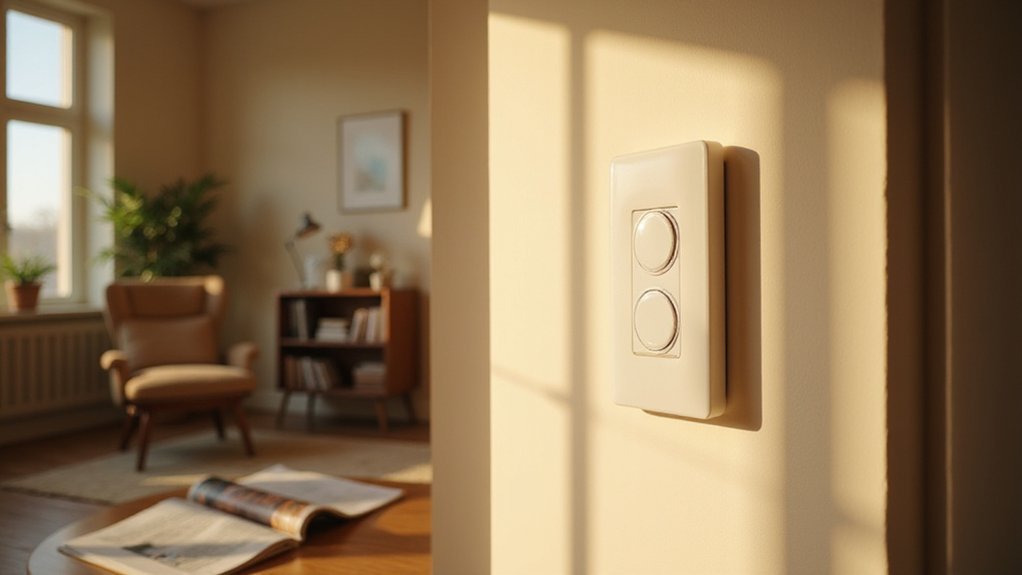
Deciding between smart bulbs and smart switches can feel overwhelming, especially if you want easy, reliable lighting in your home.
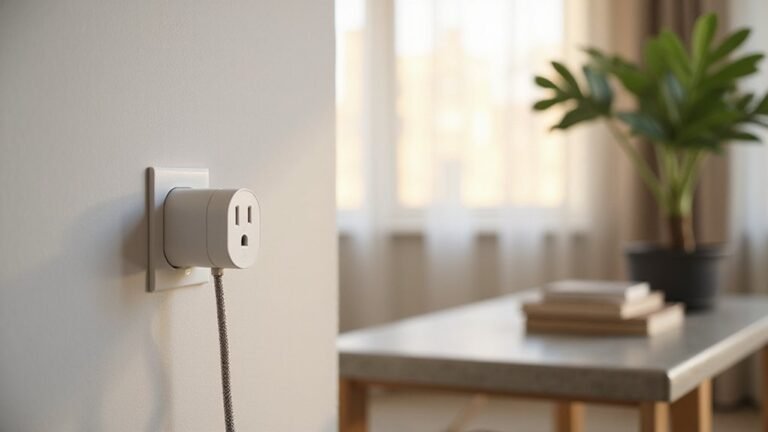
Smart switches keep your existing bulbs and switches but offer whole-room control.
Smart bulbs give you more color options and flexibility for specific fixtures.
The best choice depends on your setup and what you prioritize—whether that’s simplicity, cost, or customization.
Keep reading to find the perfect fit for your space.
Smart Bulbs vs Smart Switches: What’s the Real Difference?
Smart bulbs and smart switches approach home lighting control differently, so your choice depends on your desired level of control and installation preferences. Smart bulbs replace the individual bulbs themselves, giving you app, voice, and dimming control over each light. They allow for customized scenes, colors, and lighting effects, but require that the wall switch remains turned on, otherwise the bulb will lose power and become unresponsive. Additionally, smart bulbs enable extensive ambiance changes through color and intensity adjustments. However, if you notice a persistent flicker, it often stems from incompatible dimmer switches or a low-quality driver, which are common root causes that a quick DIY diagnosis can identify before deciding on a fix. Just as a ceiling fan direction must be adjusted for seasonal efficiency, smart bulb flicker may require identifying an underlying electrical issue. If you are also troubleshooting a ceiling fan remote, you may need to perform a specific reset procedure to re-establish communication with the receiver.
In contrast, smart switches replace the existing wall switch and control the entire fixture or group of bulbs connected to that switch. They retain the familiar physical switch operation, making them easier to use for everyday tasks, and improve energy efficiency by managing multiple bulbs at once. Installing smart switches often involves more electrical work compared to swapping out bulbs, but they provide a more integrated, whole-circuit solution that doesn’t require replacing each bulb individually.
Which One Fits Your Room? A Room-by-Room Guide
In living rooms, switches are ideal when you have multiple ceiling lights on one circuit because your muscle memory remains familiar. They provide quick, reliable control without needing an app or voice command. For accent lamps or color-changing scenes during movie night, bulbs are better since you can easily dim or adjust their color with a remote or app. This flexibility makes creating the right atmosphere simple and quick. When installing a fan and light, safe wiring tips ensure a clean DIY finish without electrical hazards. For a completely different aesthetic, you could instead choose a decorative bubble chandelier that adds sculptural elegance while using standard bulbs.
Smart Bulbs vs Smart Switches: Cost Breakdown
Smart switches generally cost more upfront than smart bulbs, but they can be more economical in larger installations. A typical smart switch costs around $35 each, while a smart bulb usually runs $10–$20. For a fixture with three bulbs, replacing each with a smart bulb totals about $45. Installing a single switch that controls all bulbs costs less overall, at $35, making it the more budget-friendly option in the long run. This approach is especially efficient for rooms with many light bulbs, such as kitchens, where smart switches are ideal due to cost-effectiveness.
Durability also plays a role: bulbs tend to burn out faster than switches, leading to additional replacement costs over time. Smart switch compatibility with standard LED bulbs helps keep your long-term spending lower since you may not need to upgrade bulbs as frequently. Hidden expenses such as hubs, which add $50–$100 for bulb systems, are generally unnecessary for smart switches, reducing overall costs. Additionally, the real-world lifespan of LED downlights can be shortened by poor heat dissipation, which smart switches help avoid by not physically housing the bulb electronics. Installation costs for switches can run from $75 to $150 per unit, but for larger projects, switching to smart switches often results in overall savings due to fewer components and less maintenance.
Installation: Why Renters Choose Bulbs and Homeowners Choose Switches
Renters prefer smart bulbs because they are easy to install—simply screw them into an existing socket without any tools or wiring changes. This allows you to customize your lighting quickly and move your setup from room to room, making it ideal for short-term stays or frequent moves. Since you keep your original bulbs and avoid altering the building’s wiring, landlords remain happy, and there are no lease violations. Additionally, this portable approach protects your decor investment by enabling you to take your lighting preferences with you when you move. The bulb blinks three times indicating readiness for setup, which confirms the connection process is straightforward. Unlike permanent fixtures, smart bulbs use standard screw bases that fit typical household sockets, avoiding the need for specialized track lighting connectors found in some commercial setups. Homeowners, however, may need to replace a ceiling fan light kit that requires turning off power at the breaker and using a screwdriver to detach the existing unit, a process far more involved than swapping a bulb. In contrast, installing a chandelier with antlers typically involves hardwiring the fixture to a junction box, which requires permanent electrical work and is therefore better suited for homeowners who own the property.
The Wall Switch Problem: Why Smart Bulbs Go Dark
The reason your smart bulb goes dark when flipping the wall switch is that the switch physically cuts the power, cutting off the circuit and leaving the bulb unresponsive to your app, voice, or automation. This is a wiring interruption that creates a complete disconnect.
However, some switches with pilot lights or older wiring do not shut off the electrical current cleanly. They allow a tiny trickle of residual current to pass through. This residual current can cause the smart bulb to glow faintly, flicker, or strobe in the dark. Because of this weak energy flow, the bulb’s internal circuit stays half-alive, leading to a frustrating state where the bulb appears neither fully on nor truly off. To ensure a clean and reliable connection, using push-in wire connectors can help secure the wiring and minimize such residual current issues. This issue is closely related to uplight principles, which explain how angled fixtures can also produce unintended ambient glow when residual power is present. For a permanent fix, you can also install a junction box to safely house all exposed connections and keep the circuit stable.
Why Smart Switches Win for Shared Households
Smart switches are ideal for shared households because they keep lighting control simple and accessible for everyone. You don’t need a phone or app to turn lights on or off, so anyone entering a room—guests, children, or roommates—can operate them directly using the physical switch. This prevents the common frustration with smart bulbs that turn off or change unexpectedly when someone flips the wrong switch. If a smart switch ever becomes unresponsive, you can often resolve the issue by performing a device reset following the specific steps for your model. For proper placement, consider ceiling fan size and spacing guidelines to ensure even coverage and avoid layout conflicts.
Smart switches also offer seamless aesthetic integration—they match your existing wall plates and eliminate the need to replace bulbs individually. Privacy isn’t a concern since no personal device or login is required for everyday lighting use. You can set schedules, enable motion sensing, or control lights with your voice for entire rooms without depending on any one person’s routine. Plus, energy savings and remote shutoff become simple tasks, helping shared spaces function smoothly without constant coordination. For a clean DIY finish, always follow safe wiring tips when installing a smart switch.
How to Decide: A Simple Decision Framework?
If you’re deciding between smart bulbs and smart switches, the best approach is to evaluate what you need the light to do and where you will be installing it. For rentals or situations where you want color effects and quick setup, smart bulbs are the better choice—they screw into existing sockets instantly and allow you to customize individual lamps. In contrast, if you’re controlling overhead fixtures or multiple lights in a room, smart switches provide broader coverage and are more cost-effective since they avoid paying per bulb. For long-term savings, smart bulbs typically have a longer lifespan than traditional bulbs, reducing replacement costs over time.
Check your wiring before making a decision. Smart switches often require a neutral wire to function properly, which can be an issue in older homes lacking this wiring. If you’re comfortable with electrical work or can hire a professional, a smart switch might be a good fit. Smart bulbs, on the other hand, sidestep wiring compatibility issues entirely.
Consider voice control integration. Smart bulbs generally continue to work if someone turns the physical switch off, but voice commands won’t activate them unless you use specific workarounds. Smart switches typically allow seamless physical and voice control since they control power at the circuit level.