Choosing the right LED strip light can feel overwhelming with so many options available.
Whether you’re after colorful RGB, warm white, or custom addressable strips, each type offers different benefits depending on your project.
Understanding the options helps you pick the perfect fit for your space and purpose.
The details below will guide you through the key choices.
Single-Color, Tunable White, RGB, or Addressable LED Strips: Which One Fits Your Project?
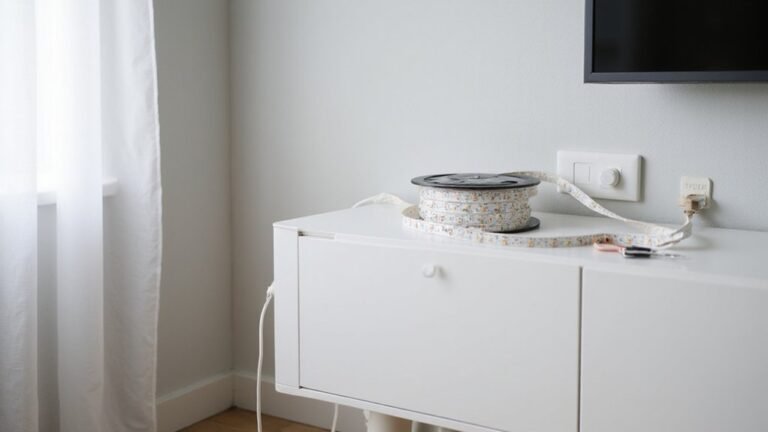
Single-color LED strips are the simplest option, providing a fixed, monochromatic light. They require no controller beyond the basic power supply, making installation straightforward and cost-effective. These strips are ideal for spaces where consistent lighting is needed, like under cabinets or for accent lighting. You choose them when your project calls for a single hue and don’t need color changes or dynamic effects. They tend to be more reliable and easier to set up, especially for DIY projects or quick installations. Their design focuses on one hue, meaning brightness is adjustable but the color remains constant. For a more decorative touch, you can install them inside wall sconce candle holders to create a consistent warm glow. Unlike DC motor ceiling fans, these strips consume less power and generate no mechanical noise. When installing them near existing fixtures, always turn off the power at the breaker to avoid electrical shock, just as you would when wiring a ceiling fan.
SMD vs. COB LED Strips: How the Chip Type Changes Output and Uniformity
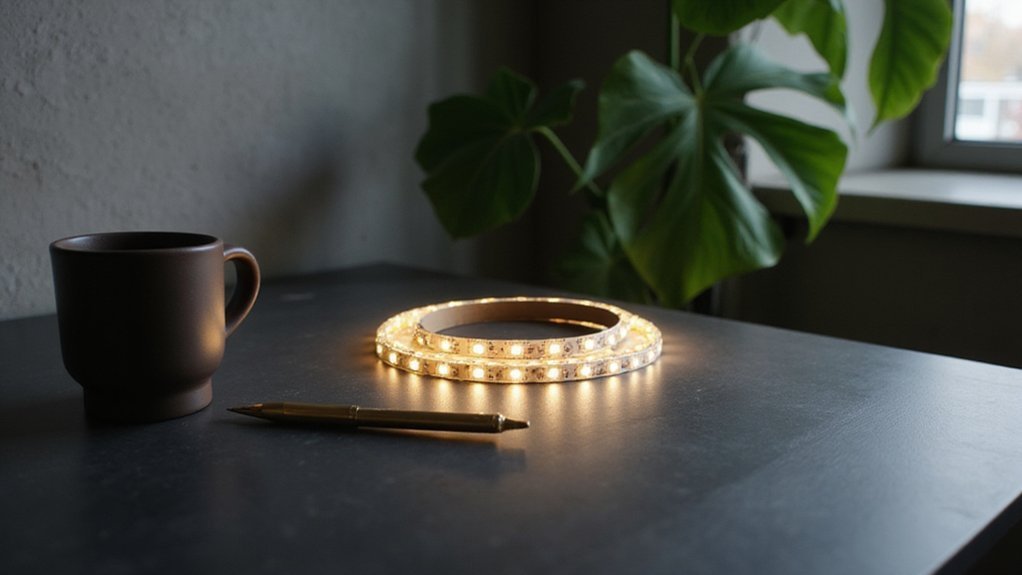
The choice between SMD and COB LEDs significantly impacts the visual output and uniformity of LED strips. SMD (Surface Mount Device) LEDs consist of discrete chips spaced apart, which results in visible points of light and potential hotspots. To achieve a more even appearance, SMD strips typically require diffusers or increased distance from surfaces. In contrast, COB (Chip-On-Board) LEDs pack emitters densely together at the chip level, creating a continuous, seamless glow without visible dots. For users experiencing connectivity issues, noting that the reset procedure for LED controllers often mirrors the troubleshooting steps used for other smart home devices. Many universal remotes for ceiling fans also use a similar pairing reset to resolve connectivity problems. Troubleshooting an unresponsive controller is similar to checking for a manual wall switch that may have been left off. COB LED strips generally deliver around 15 to 20 percent higher luminous efficiency per meter compared to SMD strips. However, actual brightness varies by product; for example, SMD 5050 strips can reach over 500 lumens per meter. When it comes to light uniformity, COB strips excel, offering a variation of just ±8 percent without additional diffusion. SMD strips, on the other hand, can have fluctuations up to ±25 percent, making COB better suited for applications where a smooth, dot-free light is desired near surfaces or within coves. Overall, choose SMD strips for colorful, budget-friendly options and easier customization, while COB is ideal for refined, uniform lighting in visible areas.
How LED Strip Density Affects Brightness and Shadowing
Higher LED density significantly enhances both brightness and shadowing performance. For example, strips with 120 LEDs per meter are much brighter than those with only 30 LEDs per meter because they pack more light sources into the same length, increasing total lumens. This means a 120-LED/m strip appears noticeably more luminous than a 30-LED/m version using the same type of chip.
In addition, increased LED density reduces visible gaps and uneven lighting. Low-density strips create noticeable points of light and dotted shadows, especially through diffusers. Conversely, high-density strips distribute light more evenly, resulting in a smooth, continuous line free of spots. This principle of even light distribution is similar to how recessed ceiling lights can provide elegant, shadow-free illumination when properly spaced. If you want a shadow-free, uniform glow—especially for architectural or exposed installations—opting for a high-density LED strip is your best choice. This principle is similar to how choosing the right ceiling fan direction can optimize air movement and comfort year-round.
For installations requiring long runs, 24V LED strips help maintain consistent brightness by reducing voltage drop, which further enhances uniform light output.
Why Voltage Matters for LED Strip Runs and Power Drop
Voltage drop is a critical factor in ensuring your LED strip maintains consistent brightness along its entire run. As current flows through the copper traces of the strip, resistance causes the voltage to decrease progressively from the power source to the far end. This results in the last sections of the strip appearing dimmer or shifting to a warmer white, disrupting uniformity. To counteract this, using higher voltage strips such as 24V instead of 12V can help. Higher voltage reduces the current needed for the same power output, which in turn minimizes resistive losses and allows for longer runs before noticeable brightness drops occur. For optimal results, avoid running a single long section from one power source. Instead, break longer runs into multiple shorter segments and inject power at multiple points along the strip. Using thicker wire for power feeds and recentralizing or dual-feeding the power supply also helps reduce the length of the current path. Additionally, pairing these voltage strategies with a compatible LED remote ensures precise control over brightness and color tuning across the installation. These strategies ensure your entire LED installation reveals consistent brightness and color, preventing the frustration of uneven lighting. A complete build walkthrough can show you exactly how to implement these power injection techniques for a flawless result. For those unfamiliar with resistive losses in wiring, proper safe wiring tips from a ceiling fan guide can be adapted to ensure secure and efficient power connections for LED strips.
IP Ratings for LED Strip Lights: Indoor vs. Outdoor Protection
Choosing the right IP rating for your LED strip lights depends on the environment and exposure to moisture and dust. For indoor use in dry spaces, IP20 is sufficient because it offers no water protection but provides basic dust resistance. However, for damp areas like bathrooms or kitchens, you should select a higher rating such as IP44 or IP65, which can withstand splashes and light water exposure. Outdoor installations require even better protection: IP65 ensures resistance to water jets and rain, making it suitable for covered outdoor areas. If your setup involves areas where pooling water or temporary immersion might occur, IP67 is necessary for reliable protection against water ingress. Keep in mind that installation considerations also matter—indoor LED strips with IP20 are typically more flexible and slim, whereas outdoor-rated strips tend to have thicker silicone coatings for enhanced durability and protection. For projects using string lights, using a guide wire can help achieve a clean, professional finish. Always match the IP rating to the level of moisture and dust your lighting environment will face to ensure safety and longevity. For permanent outdoor installations, embedding strips in concrete requires proper waterproofing to prevent moisture damage over time. When mounting strips under cabinets or along ceilings, ensure the placement rules account for even light distribution and avoid shadows.
Match Your LED Strip Type to Your Specific Application
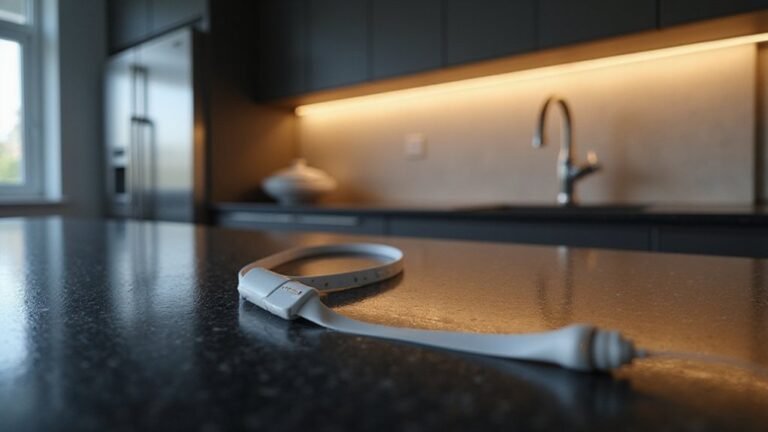
Choosing the right LED strip type depends on your intended application. For kitchens or workstations, opt for a high-CRI single-color strip, which provides a clear, bright output that reduces shadows and highlights fine details. Managing power consumption is also important; strips with high-density LEDs, typically 60 or more per meter, deliver consistent brightness while being efficient with your driver’s capacity. For coves or shelf edges, COB (Chip on Board) strips create a seamless glow by eliminating the dotted appearance common with traditional LED strips. If you want to layer multiple atmospheres, tunable white LED strips allow you to adjust the color temperature from cool, energetic light to warm, relaxing tones. In visible installations, COB strips are preferred for their single-source effect, providing a uniform appearance without harsh light points.
Standard-density strips are suitable for general lighting but may not offer the precision needed for detailed tasks. Retail displays benefit from high-CRI or RGBW strips, which accurately render colors and provide flexible white tones to showcase products effectively. Low-density options are best reserved for subtle accents such as behind TVs or molding, where less brightness is preferred. Matching the density and CRI level of your LED strip to your specific need ensures optimal lighting performance for each application.